

Evicting a tenant is rarely straightforward. The process involves dealing with legal requirements, managing interpersonal challenges, and sometimes facing unexpected hurdles. In Virginia, landlords must adhere to specific steps outlined by state law to protect their rights while ensuring fairness.
Whether a tenant has missed rent payments, broken lease terms, or refused to vacate after the lease ended, knowing how to handle these situations can save you time, money, and stress. This leads to a common question: "How do you evict a tenant in Virginia?" This blog explains the legal steps you must follow, the potential challenges you may face, and the key tenant protections you need to understand. To start, let’s explore the reasons why you might need to evict a tenant in Virginia and how state laws define these situations. 
Reasons for Eviction in Virginia
Before initiating an eviction, it’s important to confirm that your reason for removing the tenant aligns with Virginia’s legal grounds for eviction. Common reasons include:
- Nonpayment of rent: If a tenant fails to pay rent by the due date, you can start the eviction process.
- Lease violations: This includes unauthorized pets, property damage, or other breaches of the lease agreement.
- Holdover tenancy: When a tenant remains on the property after the lease has expired without your consent.
- Illegal activity: If the tenant engages in unlawful activities on the property.
While it's essential to confirm your reasons for eviction align with Virginia law, it's equally important to recognize the rights tenants are afforded during this process. These protections help ensure fairness and compliance for both parties.
Tenant's Rights and Protections
Tenants have specific rights, including the right to receive proper notice and the opportunity to remedy certain breaches. Additionally, tenants are protected from retaliatory actions by landlords. Both landlords and tenants need to be aware of their rights and obligations under the Virginia Residential Landlord and Tenant Act (VRLTA) to maintain compliance with state laws.
The VRLTA governs only residential rental agreements. Commercial leases fall under separate rules and are typically governed by the terms of the lease agreement and general contract law in Virginia. Once you've established a valid reason for eviction and understand tenant protections, the next step is to begin the formal process. This starts with serving the appropriate notice, as required by Virginia law.
Step 1: Provide Proper Notice to the Tenant
Virginia law requires that you give your tenant written notice before filing for eviction. The type of notice depends on the reason for eviction:
- Pay or Quit Notice: For nonpayment of rent, you must provide a 5-day notice that allows the tenant to either pay the overdue rent or move out.
- Notice of Lease Violation: For breaches of the lease, you must typically provide a 21/30 notice. This gives the tenant 21 days to remedy the violation or 30 days to vacate.
- Immediate Notice for Non-Remediable Breach: In cases of illegal activity or severe lease violations, landlords may issue an immediate notice requiring the tenant to vacate without an opportunity to remedy the breach. However, "immediate notice" does not mean instant eviction—it still requires proper service of the notice in accordance with Virginia law. For example, the notice must be delivered via hand delivery, mail, or another approved method. Failure to properly serve the notice can delay or invalidate the eviction process.
Step 2: File an Unlawful Detainer Lawsuit
If the tenant does not comply with the notice, your next step is to file an unlawful detainer lawsuit in the General District Court where the property is located. Here’s what you need to do:
- Prepare the necessary documentation: Gather a copy of the lease agreement, records of unpaid rent (if applicable), and the written notice provided to the tenant.
- File the complaint: Submit a Complaint for Unlawful Detainer form to the court clerk and pay the filing fee.
- Serve the tenant: The court will arrange to serve the tenant with a summons and a copy of the complaint.
Step 3: Attend the Court Hearing
Both you and the tenant will have the opportunity to present your case in court. To improve your chances of success:
- Be prepared: Bring all relevant documentation, including the lease, notices, and any communication with the tenant.
- Follow court procedures: Adhere to the rules of the General District Court.
If the court rules in your favor, it will issue a judgment for possession, allowing you to reclaim your property.
Step 4: Obtain a Writ of Eviction
After receiving a judgment for possession, Virginia law requires a mandatory 10-day waiting period before you can request a writ of eviction. This period allows the tenant an opportunity to appeal the judgment or vacate voluntarily. Once the 10 days have passed:
- Request the writ: File a request with the court clerk for the writ of eviction. This must be done within 180 days of the judgment for possession; otherwise, you may need to restart the eviction process.
- Coordinate with the sheriff: After the writ is issued, the sheriff oversees the eviction process. The sheriff must provide the tenant with at least 72 hours written notice before executing the writ. This notice allows the tenant a final opportunity to vacate the property voluntarily.
- Execution timeline: The writ must be executed within 30 days of its issuance. If the eviction is not carried out within this timeframe, a new writ will be required.
Note: Virginia law allows tenants to exercise an extended right of redemption, which means they can pay all outstanding amounts owed—including rent, late fees, court costs, and other charges—up to two business days before the eviction is scheduled to avoid removal.
By adhering to these timelines and coordinating with the sheriff's office, you can complete the final step in reclaiming your property.
Step 5: Regain Possession of the Property
On the scheduled eviction date, the sheriff will accompany you to the property to ensure the tenant has vacated. You may then change the locks and take control of your property.
While these steps outline the eviction process, landlords must be prepared for potential defenses tenants may use to challenge the eviction. Understanding these defenses can help you stay ahead of disputes. 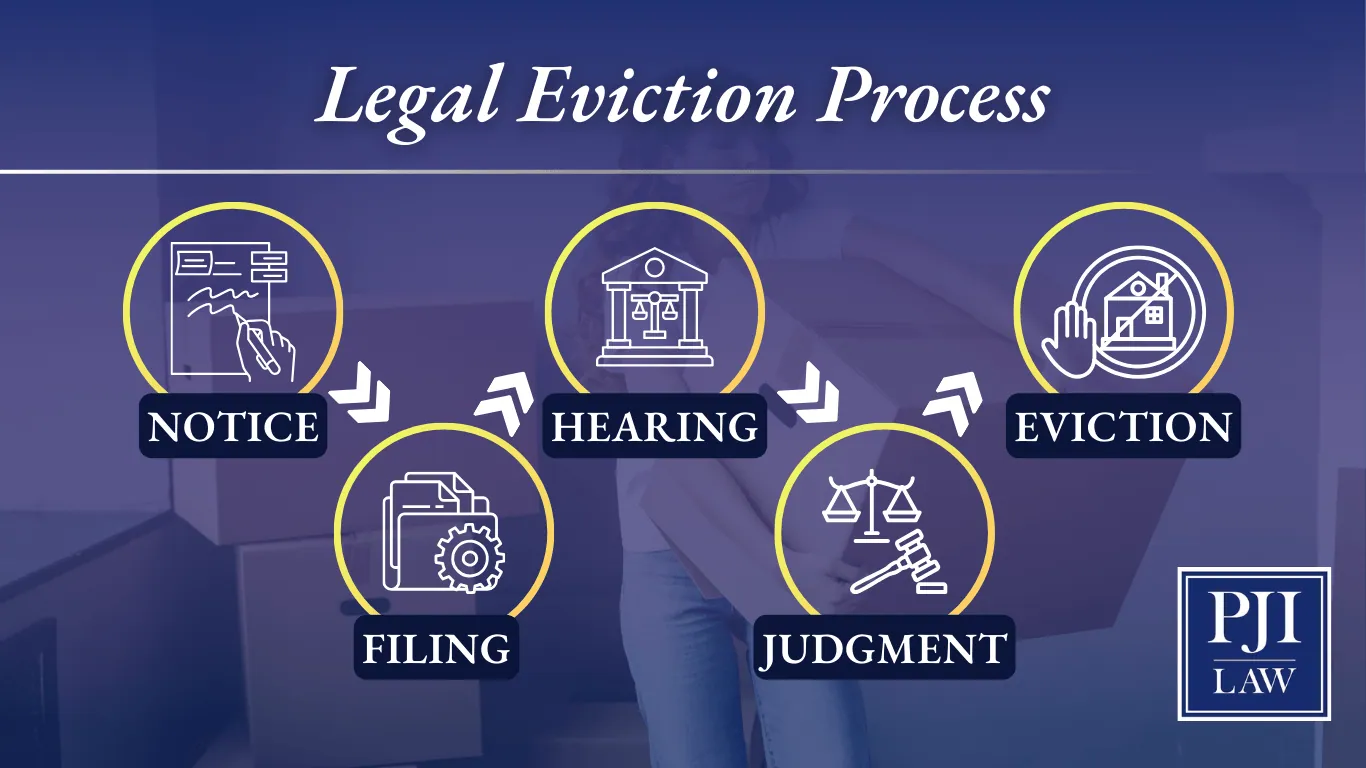
Tenant Defenses to Eviction in Virginia
Tenants have legal rights that allow them to defend against eviction in certain situations. Be prepared for these potential defenses:
- Improper notice: If the notice you provided doesn’t comply with Virginia law, the tenant may contest it.
- Retaliatory eviction claims: Evictions made in retaliation for a tenant exercising legal rights, such as reporting code violations, are prohibited.
- Habitability issues: If the tenant claims the property is uninhabitable due to unresolved maintenance problems, the court may side with them.
Tenant defenses are just one of the many hurdles landlords may encounter. From procedural errors to court delays, being aware of these challenges can help you navigate the process more effectively.
Common Challenges Landlords Face During the Eviction Process
The eviction process can come with obstacles. Some common challenges include:
- Tenant counterclaims: Tenants may raise defenses such as retaliation or habitability issues.
- Procedural errors: Failing to follow Virginia’s strict eviction procedures can delay or invalidate the process.
- Court delays: Scheduling hearings or obtaining a writ of eviction may take longer than expected.
By staying organized and prepared, you can address these challenges effectively. However, in some cases, landlords may find it beneficial to consider alternatives to eviction. These options can save time, reduce costs, and preserve tenant relationships when appropriate.
Alternatives to Eviction

Eviction isn’t always the only option. You can explore alternatives that might save time and costs while resolving the issue with your tenant. Some options include:
- Mediation: Work with a neutral third party to negotiate a solution that satisfies both you and your tenant.
- Payment plans: If your tenant has financial difficulties, consider creating a temporary payment plan to help them catch up on rent.
- Lease modifications: Adjust the lease terms to address the current situation and keep the tenant in compliance.
If eviction becomes unavoidable, it’s important to be aware of the potential financial implications. Understanding the associated costs can help you plan and manage expenses effectively.
Costs Associated with Eviction
Evicting a tenant involves costs that you should consider before proceeding. These may include:
- Court filing fees
- Sheriff’s fees for executing the writ of eviction
- Loss of rental income during the process
- Legal fees, if you hire an attorney
To minimize costs, ensure that all required documentation—such as notices, lease agreements, and payment records—is well-organized and accurate. Additionally, avoid procedural missteps, as these can lead to delays and additional expenses.
Once the eviction process is complete, your responsibilities as a landlord don’t end. Taking the right post-eviction steps can protect your investment and prepare your property for the next tenant. 
Post-Eviction Steps for Landlords
After regaining possession of your property, there are several important steps to take:
- Handling Security Deposits: You must return the tenant’s security deposit within 45 days of the lease ending. If deductions are made for unpaid rent or damages, you must provide an itemized list along with any remaining balance. Failure to do so may result in legal penalties.
- Evaluating Property Condition: Conduct a thorough inspection of the property to document its condition. Use photographs or videos as evidence, particularly if you plan to make deductions from the security deposit.
- Repair and Cleaning: Ensure the property meets safety and habitability standards before re-renting.
- Screening Future Tenants: Improve your tenant screening process by checking credit history, contacting references, and verifying employment. This reduces the likelihood of future disputes or evictions.
Properly addressing these post-eviction steps not only protects your investment but also sets the stage for a more successful landlord-tenant relationship moving forward. Throughout the eviction process, landlords must also comply with fair housing laws to ensure actions remain lawful and non-discriminatory.
Eviction and Fair Housing Laws
Complying with fair housing laws is critical throughout the eviction process. These laws prohibit discrimination based on race, religion, sex, national origin, disability, familial status, and other protected characteristics. Even unintentional bias, such as applying policies inconsistently, can lead to legal trouble.
To avoid potential violations:
- Apply rules and policies consistently to all tenants.
- Document interactions and decisions thoroughly, especially those related to lease violations and notices.
- Refrain from using language or actions that could be perceived as discriminatory.
For example, evicting a tenant for noise complaints while ignoring similar behavior from others could be construed as discriminatory. Understanding these legal protections helps you act fairly and lawfully, ensuring a positive reputation as a landlord.
One of the most effective ways to prevent eviction-related issues is to start with a clear and comprehensive lease agreement. Setting expectations upfront can reduce misunderstandings and disputes.
Importance of Clear Lease Agreements
A clear and detailed lease agreement can help you avoid disputes that lead to eviction. Include terms that define:
- Rent payment schedules and late fees
- Rules for property use and maintenance
- Consequences for violations
A well-crafted lease protects both you and your tenant. However, even with a solid lease agreement, challenges can arise. By adopting proactive strategies, you can streamline the eviction process and minimize stress. 
Tips for a Smooth Eviction Process
While following the legal steps is critical, you can take additional measures to minimize stress and avoid complications:
- Communicate Early: Open communication with your tenant can sometimes resolve issues before they escalate to eviction. Address concerns as soon as they arise and provide clear explanations of expectations and consequences for noncompliance. Even if eviction becomes unavoidable, a respectful dialogue may make the process less contentious.
- Document Everything: Keep thorough and organized records of rent payments, lease violations, maintenance requests, and any communication with your tenant. These records can serve as vital evidence in court and protect you from potential counterclaims or disputes.
- Seek Legal Guidance: If you’re dealing with complex situations, such as disputes over habitability or retaliatory eviction claims, consult real estate lawyers in Virginia who are well-versed in Virginia landlord-tenant laws. This can help you avoid procedural missteps that could delay or invalidate the eviction.
- Be Proactive About Lease Terms: Consider including clauses in your lease agreements that clearly outline consequences for nonpayment or lease violations. Transparent and specific terms reduce ambiguity and make it easier to enforce your rights as a landlord.
- Prepare for Court: If the matter proceeds to a hearing, bring all necessary documentation, such as the lease agreement, notices, and payment records. Practicing your statements and understanding court procedures can make your presentation more effective and persuasive.
- Anticipate Tenant Defenses: Familiarize yourself with common tenant defenses, such as claims of improper notice or uninhabitable conditions. Address any potential issues beforehand to strengthen your position in court.
These strategies can streamline the eviction process and reduce the likelihood of complications, ensuring a smoother path to reclaiming your property.
Evicting a tenant in Virginia involves a series of legal steps that must be followed carefully to avoid potential legal challenges. By adhering to state laws and maintaining open communication when possible, you can manage the process with professionalism and respect. If you’re uncertain about any part of the eviction process, consulting a real estate dispute lawyer can provide clarity and protect your rights as a landlord.
Contact PJI Law for Strategic Legal Support for Your Virginia Eviction
Evicting a tenant can be a demanding process. You need to follow Virginia’s landlord-tenant laws carefully to avoid delays or costly mistakes. At PJI Law, our Virginia real estate lawyers will guide you through each step, from serving proper notices to representing you in court.
We work with landlords to resolve disputes efficiently, protect property rights, and ensure a legally compliant eviction process. Whether you’re dealing with unpaid rent or lease violations, you can rely on us to simplify the process and protect your interests.
Beyond handling evictions, we can also help you prevent future disputes by reviewing or drafting clear, legally sound lease agreements tailored to protect your rights and interests as a landlord.
Take control of your real estate challenges today. Call PJI Law at (703) 865-6100 or fill out our confidential online form to schedule a consultation. Let us assist you in achieving a smooth and fair resolution.
At PJI Law, you’ll receive white glove service and personalized attention!
Copyright © 2025. PJI Law, PLC. All rights reserved.
Copyright © 2026. PJI Law, PLC. All rights reserved.
The information in this blog post (“post”) is provided for general informational purposes only and may not reflect the current law in your jurisdiction. No information in this post should be construed as legal advice from the individual author or the law firm, nor is it intended to be a substitute for legal counsel on any subject matter. No reader of this post should act or refrain from acting based on any information included in or accessible through this post without seeking the appropriate legal or other professional advice on the particular facts and circumstances at issue from a lawyer licensed in the recipient’s state, country, or other appropriate licensing jurisdiction.
3900 Jermantown Road, 2nd Floor
Fairfax, VA 22030
(703) 546-9674
https://www.pjilaw.com
Request A Complimentary Call From Our Team
Provide your details, and we’ll reach out promptly to assist you.