

Richmond natives John and Mary Thompson spent their lives working hard, with dreams of leaving a lasting legacy for their children and grandchildren. They took pride in their small business, modest home, a vacation property in Virginia Beach, a few cherished family heirlooms, and a nest egg that they hoped would support their family for generations. Confident that their assets would naturally transfer to their loved ones, the Thompsons never imagined that after their death, their children would have to deal with the complexities of the probate process and estate taxes in the absence of a proper estate plan.
Unknown to John and Mary, Virginia offers many types of trusts that could have safeguarded their intentions. Among their three children, their youngest son, David, who has Down syndrome, would have greatly benefited from a special needs trust, which would have secured his lifelong care and financial security without jeopardizing his eligibility for government assistance.
As John and Mary faced the inevitable challenges of aging, they began to realize that their well-intentioned legacy might not unfold as planned. Hoping it wasn't too late, they started the estate planning process with a focus on trusts and how they might serve their unique circumstances. As the local trust attorneys at PJI Law in Richmond know, trusts are a vital aspect of estate planning. Contrary to a popular myth, anyone who wishes to secure their legacy and provide for their loved ones can benefit from a trust, regardless of the amount of money they have in the bank or their annual salary.
When established with the help of an experienced estate attorney, trusts can help you manage and protect assets, avoid probate, and minimize taxes. This blog explores the various trust options in Virginia and how certain types can work for you, depending on your specific concerns.
Have you been searching online for a "trust attorney near me?" Contact us at (804) 653-3450 to schedule a consultation. With personalized service and attention, we will listen to your goals, gather the details, and recommend the right trusts for you as part of a comprehensive estate plan.
Understanding Trusts in Virginia
A trust is a legal arrangement established by an individual known as the grantor (settlor), that designates an individual, known as the trustee, to hold and manage money and property for any person or persons — the beneficiary or beneficiaries named by the grantor. Once the grantor transfers ownership of an asset into the trust, it belongs to the trust itself, not to the trustee. The grantor can tailor the trust to address their specific goals.
Revocable Trusts
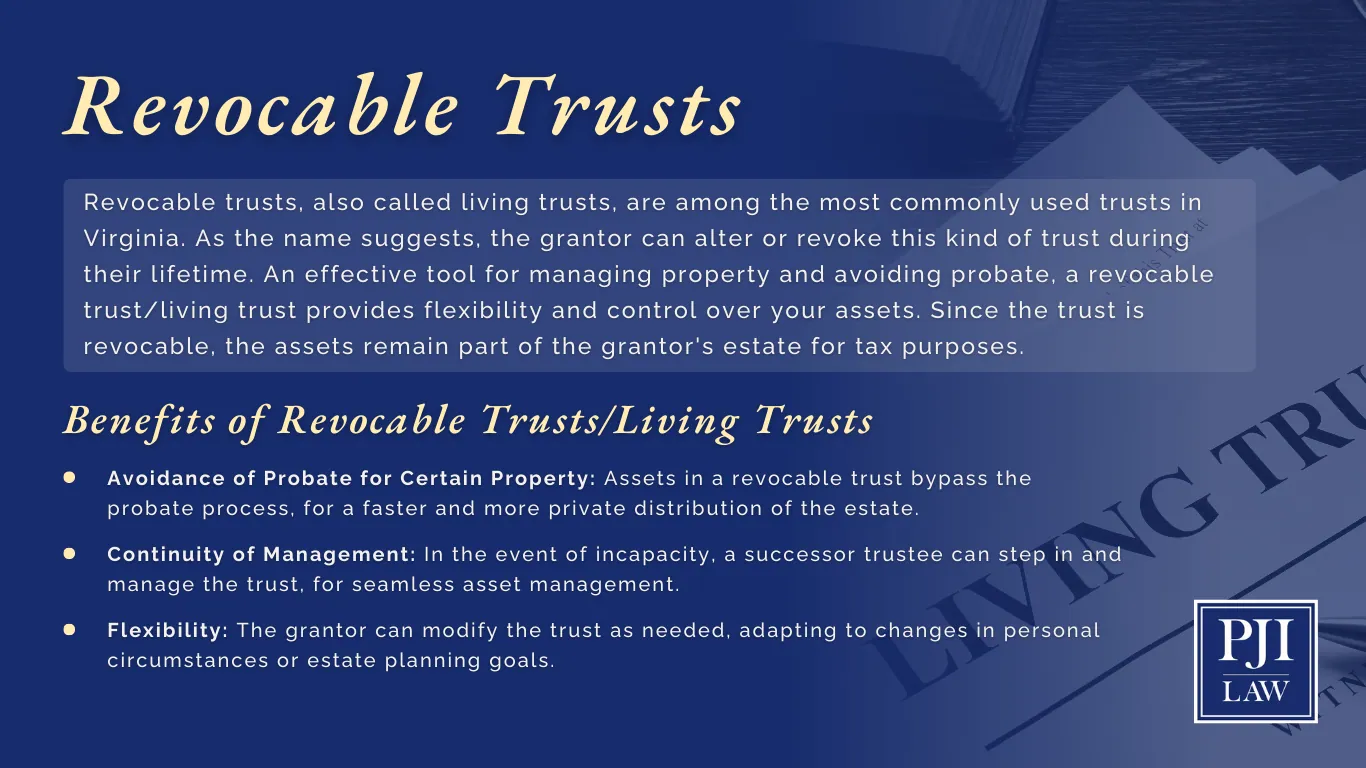
Revocable trusts, also called living trusts, are among the most commonly used trusts in Virginia. As the name suggests, the grantor can alter or revoke this kind of trust during their lifetime. An effective tool for managing property and avoiding probate, a revocable trust/living trust provides flexibility and control over your assets. Since the trust is revocable, the assets remain part of the grantor's estate for tax purposes.
Benefits of Revocable Trusts/Living Trusts
- Avoidance of Probate for Certain Property: Assets in a revocable trust bypass the probate process, for a faster and more private distribution of the estate.
- Continuity of Management: In the event of incapacity, a successor trustee can step in and manage the trust, for seamless asset management.
- Flexibility: The grantor can modify the trust as needed, adapting to changes in personal circumstances or estate planning goals.
Irrevocable Trusts
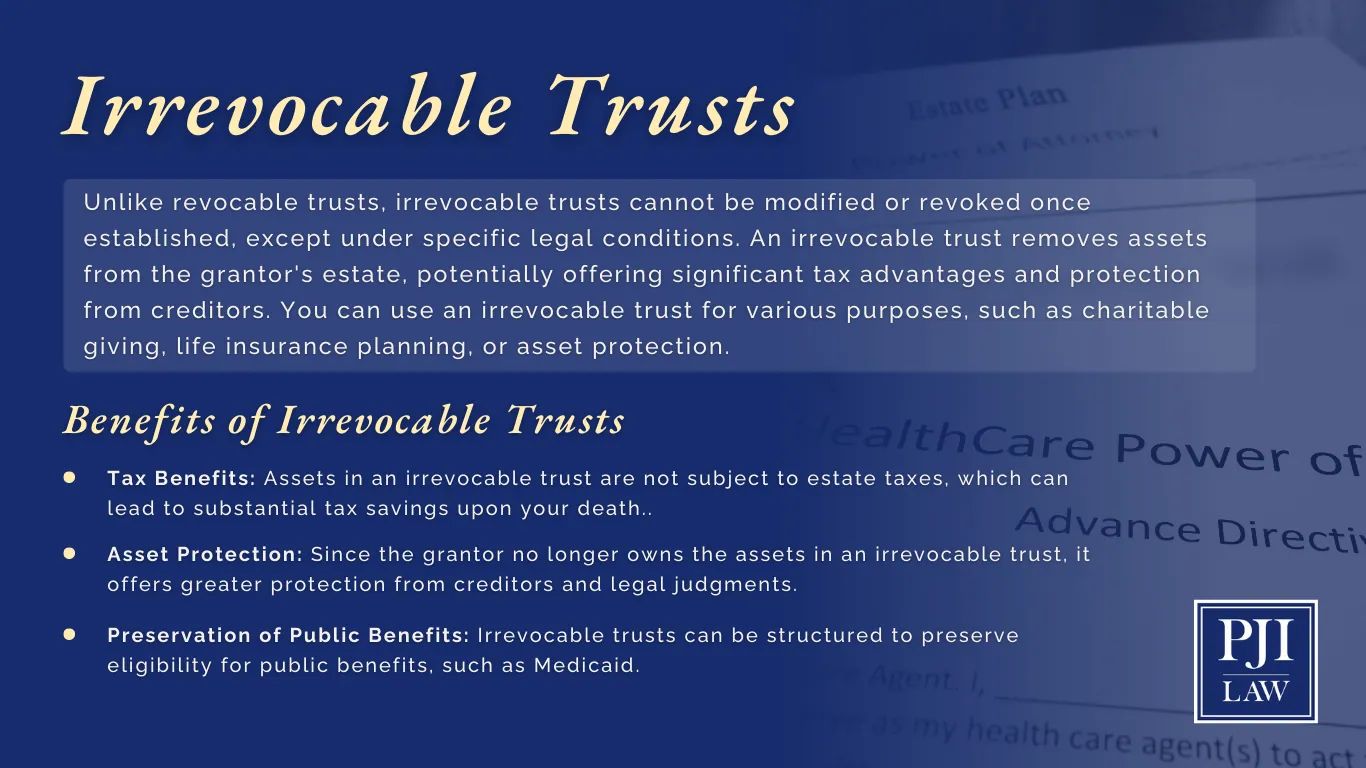
Unlike revocable trusts, irrevocable trusts cannot be modified or revoked once established, except under specific legal conditions. An irrevocable trust removes assets from the grantor's estate, potentially offering significant tax advantages and protection from creditors. You can use an irrevocable trust for various purposes, such as charitable giving, life insurance planning, or asset protection.
For example, many Virginians choose irrevocable life insurance trusts (ILIT) to set aside funds for estate taxes. An ILIT removes the life insurance policy from the insured person's estate, reducing potential taxes. The policy's death benefit is not considered part of the estate and is not subject to estate tax, potentially saving thousands of dollars.
Benefits of Irrevocable Trusts
- Tax Benefits: Assets in an irrevocable trust are not subject to estate taxes, which can lead to substantial tax savings upon your death.
- Asset Protection: Since the grantor no longer owns the assets in an irrevocable trust, it offers greater protection from creditors and legal judgments.
- Preservation of Public Benefits: Irrevocable trusts can be structured to preserve eligibility for public benefits, such as Medicaid.
Testamentary Trusts
Created through wills, testamentary trusts take effect after the grantor's death. This trust helps individuals who wish to provide for a minor child or children or allow beneficiaries to receive assets under certain conditions, such as reaching a specific age.
Benefits of Testamentary Trusts
- Control Over Inheritance: The grantor can dictate how and when beneficiaries receive their inheritance.
- Protection for Minors: Assets can be managed by a trustee until the beneficiary reaches maturity.
Drawbacks of Testamentary Trusts
- Do Not Avoid Probate: These types of trusts are overseen by the probate court and local commissioner of accounts. The trustee of a testamentary trust is required to file an Inventory and annual Accountings until the trust is fully distributed.
- Privacy Concerns: As part of probate, both the contents of the testamentary trust and the decedent’s assets become a matter of public record.
Special Needs Trusts
A special needs trust provides for individuals with disabilities without jeopardizing their eligibility for government benefits. When you designate a special needs child or individual as the beneficiary, this trust enables them to maintain their quality of life while still qualifying for public assistance.
Benefits of Special Needs Trusts
- Preservation of Benefits: Trust assets do not count towards eligibility for Supplemental Security Income (SSI) or Medicaid.
- Quality of Life Enhancements: Funds can be used for medical care, education, and other personal needs not covered by public benefits.
Charitable Trusts
Charitable trusts allow individuals to support charitable organizations while enjoying tax benefits. There are two primary types of charitable trusts: charitable remainder trusts and charitable lead trusts.
Charitable Remainder Trust
A charitable remainder trust (CRT) lets you achieve your personal and philanthropic goals. You simply transfer assets into the trust, providing a steady income to yourself or other beneficiaries for a designated period – or even for their entire lifetime. Once that period ends, the trust distributes the remaining assets to your chosen charitable organization.
Charitable Lead Trust
A charitable lead trust (CLT) first gives a portion of the trust income to a charity for a specified amount of time. After that period ends, the trust pays the remaining funds to you or your heirs.
Benefits of Charitable Trusts
- Tax Deductions: Donors may receive income tax deductions for contributions to the trust.
- Support for Causes: These trusts enable donors to support causes they care about while potentially reducing estate taxes.

Spendthrift Trusts
Spendthrift trusts protect beneficiaries from creditors and their own potentially imprudent spending habits. The trustee controls the distribution of trust funds so that the assets serve the beneficiary's best interest.
Benefits of Spendthrift Trusts
- Creditor Protection: Beneficiaries cannot sell or pledge their interest in the trust to creditors.
- Financial Management: Trustees can manage funds prudently, preventing misuse by the beneficiary.
Qualified Personal Residence Trusts (QPRTs)
QPRTs are specialized irrevocable trusts that allow individuals to transfer their residences to beneficiaries at a reduced gift tax value. The grantor retains the right to live in the home for a specified period, after which the property passes to the beneficiaries.
Benefits of QPRTs
- Gift Tax Reduction: The value of the gift is reduced, potentially minimizing gift taxes.
- Estate Tax Savings: By removing the home from the estate, QPRTs can lead to estate tax savings.
Qualified Terminable Interest Property Trusts (QTIP)
These trusts provide income for a surviving spouse and ensure that the remaining assets go to each beneficiary designated by the grantor after the spouse passes away.
Benefits of QTIPs
- Surviving Spouse Protection: The surviving spouse receives income from the trust for life, giving them financial security.
- Control over Asset Distribution: The grantor can specify how and when assets will pass to other beneficiaries after the surviving spouse's death.
Pet Trusts
With a pet trust, you can care for your cherished pets after you pass away by designating a trustworthy individual or individuals to take responsibility for them.
Benefits of Pet Trusts
- Peace of Mind: Knowing that your pets will be cared for after your passing can bring peace of mind.
- Pet's Best Interest: You can specify how you want your pet to be taken care of and prioritize their best interests.
- Avoid Family Disputes: Pet trusts can prevent potential disagreements among family members about who should take responsibility for the pet.

Generation-Skipping Trusts
A generation-skipping trust (GST) is a strategic estate planning tool designed to minimize estate taxes across multiple generations. These trusts transfer assets to the grantor's grandchildren and bypass their children to reduce any inheritance complications and preserve long-term wealth. The primary benefit of a GST is the ability to leverage its federal tax exemption. Each individual can allocate a certain amount, indexed for inflation, to a GST without incurring the federal generation-skipping transfer tax. This exemption allows substantial amounts of wealth to be passed down without being eroded by taxes at each generational transfer.
Benefits of Generation-Skipping Trusts
- Wealth Preservation: By skipping a generation, these trusts protect assets from estate taxes twice.
- Avoidance of Probate: Trust assets pass directly to the grandchildren, avoiding the costly and time-consuming probate process.
Which Type of Trust is Best for Me - Living Trusts or Irrevocable Trusts?
Experienced Richmond estate planning lawyers know that choosing the right type of trust depends on your individual goals and circumstances. When you consult a knowledgeable lawyer, they will guide you through the process and help you make informed decisions. At PJI Law, we have extensive experience in creating customized trusts that meet our clients' unique needs.
Contact PJI Law, Your Estate Planning Lawyers in Richmond, for Help Creating a Trust
Whether you're considering a living trust or an irrevocable trust, work with an experienced estate planning attorney. Because trusts are complex legal documents, consulting a Richmond attorney with profound knowledge of state and federal laws will help you structure your trust properly so that it serves its intended purpose. An attorney can also help you navigate any potential tax implications.
PJI Law understands that every client's situation is unique. Our team of experienced estate planning lawyers is dedicated to creating trusts and other legal tools tailored for you. Whether you want to protect your money, property, and other assets, provide for loved ones, or support charitable causes, we will take the time to listen and design a trust that meets your specific needs and goals.
Schedule a consultation today at (804) 653-3450 or complete our online form. With personalized service and attention, we will help you preserve your future and legacy.
Copyright © 2024. PJI Law, PLC. All rights reserved.
Copyright © 2026. PJI Law, PLC. All rights reserved.
The information in this blog post (“post”) is provided for general informational purposes only and may not reflect the current law in your jurisdiction. No information in this post should be construed as legal advice from the individual author or the law firm, nor is it intended to be a substitute for legal counsel on any subject matter. No reader of this post should act or refrain from acting based on any information included in or accessible through this post without seeking the appropriate legal or other professional advice on the particular facts and circumstances at issue from a lawyer licensed in the recipient’s state, country, or other appropriate licensing jurisdiction.
3900 Jermantown Road, 2nd Floor
Fairfax, VA 22030
(703) 546-9674
https://www.pjilaw.com
Request A Complimentary Call From Our Team
Provide your details, and we’ll reach out promptly to assist you.