
In today’s economic climate where the cost of living continues to outpace income growth, and many Virginians find themselves turning to credit cards to cover basic needs, the shadow of debt looms large. Job losses and reduced hours have made it increasingly difficult for individuals to keep up with their debt repayments, leading to a significant legal consequence: the entry of a judgment against them in Virginia.
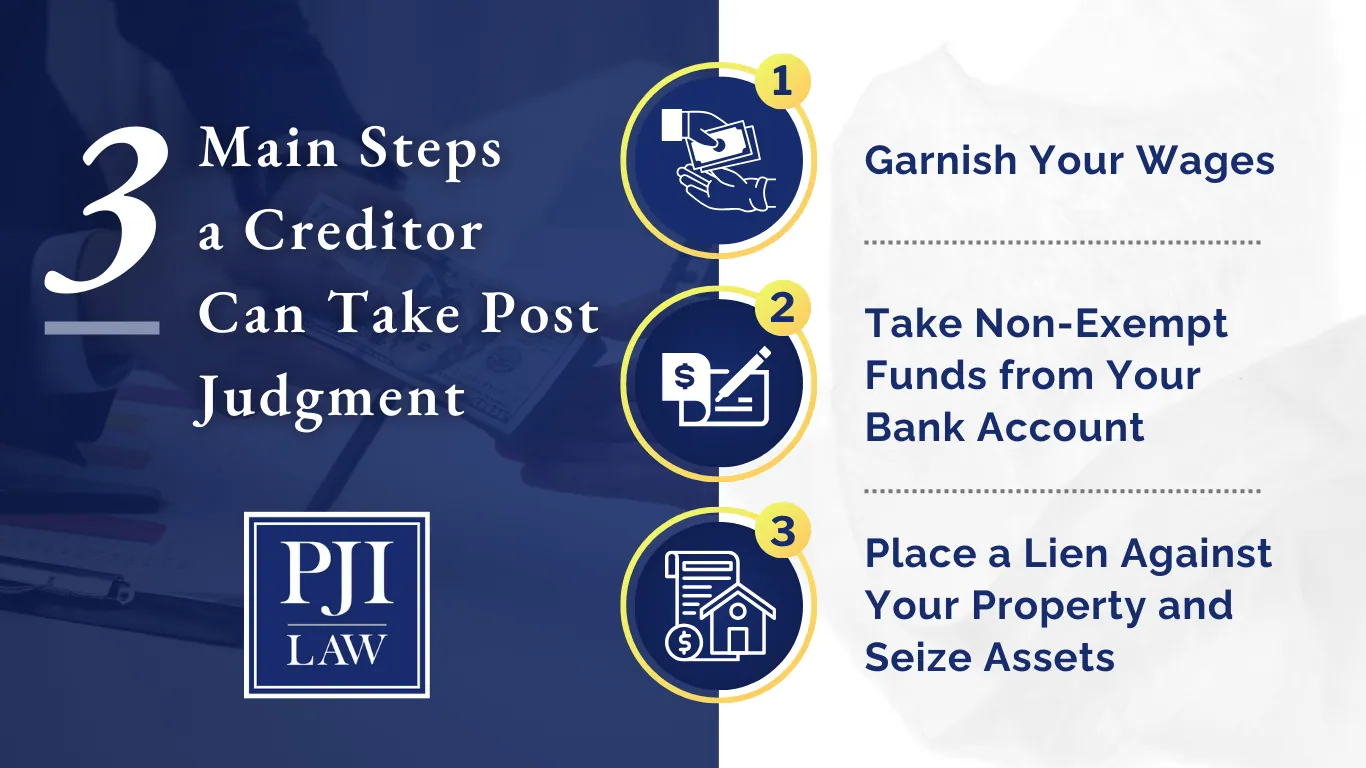
Being the subject of a court judgment for debt in Virginia is a critical event with far-reaching implications. It officially signifies that you owe a debt and grants creditors the legal channels to pursue aggressive collection actions. These can include garnishing your wages, seizing funds from your bank accounts, and placing liens on your property. Such actions not only strain your current financial situation but also affect your ability to secure credit in the future. It's essential to grasp the full impact of a court judgment and the legal processes that follow. Virginia's laws offer creditors several methods to enforce debt collection, significantly impacting your financial health. In this blog, a debt relief attorney from PJI Law explains what happens after a judgment is entered against you, detailing the legal mechanisms at creditors' disposal and suggesting strategies to navigate these challenges. But first, let’s go over what a judgment in Virginia means.
Understanding Judgments in Virginia
When a court in Virginia enters a judgment against you, it legally confirms that you owe a debt to another party. Here's what you need to know:
- Legal Status: A judgment is a court's decision that results in a legal obligation for you to pay the debt.
- Duration: Once a judgment has been entered, creditors are granted a 10-year period to pursue collection efforts. This period can be renewed twice, extending the potential collection timeline to a maximum of 30 years. Some creditors may initiate collection immediately following the judgment, whereas others might choose to wait until the appeal period concludes. Regardless of the timing, creditors have a variety of tools available for collecting the debt, such as garnishing wages or placing liens on property.
- Interest: Post-judgment interest may accrue on the outstanding amount at the rate stated in the judgment until it is paid.
- Statute of Limitations: In Virginia, creditors are given a three-year window to initiate legal action for debts arising from verbal agreements. This period extends to five years if the debt involves a written contract. Once the statute of limitations expires, creditors lose the legal right to sue for the debt. However, any payment made by the debtor can inadvertently reset this timeframe, effectively renewing the creditor's ability to take legal action. Given the complexity of these rules, seek advice from debt collector lawyers to understand your options and the potential implications of your actions.

Post-Judgment Proceedings
After a judgment is entered against you in Virginia, certain post-judgment proceedings may commence, wherein creditors attempt to collect the debt you owe. Understanding these procedures can help you navigate the situation more effectively.
Common Creditor Actions
- Wage Garnishment: A portion of your wages can be withheld directly from your paycheck and sent to the creditor. However, Virginia law protects a portion of your income, and creditors cannot garnish more than 25% of your disposable earnings (after state and federal income taxes are withheld).
- Bank Levy: The creditor may obtain a court order to freeze funds in your bank accounts.
- Property Lien: A lien could be placed on your real estate or other property. This means the creditor has a claim to the proceeds if you sell the property. Be aware that some exemptions apply to liens, protecting portions of your home equity and other assets.
- Writ of Execution: Allows the sheriff to seize and sell non-exempt personal property like vehicles or investments to satisfy the judgment. Certain assets are exempt from execution, including essential personal belongings and a portion of your home equity.
- Debtor's Interrogatories: You may be required to attend a court hearing and answer questions under oath about your finances. You have the right to legal representation during this process, and the scope of information you must disclose is limited by law.
Protecting Yourself

- Virginia law provides exemptions that shield portions of your income and property from creditors. Familiarize yourself with these exemptions to understand what you can keep.
- Open communication with the creditor is crucial. You may be able to negotiate a payment plan or other arrangements such as entering into a settlement agreement to avoid further action.
- Seeking legal advice is highly recommended. A debt relief attorney can guide you through your options, represent you in court if necessary, and ensure your rights are protected.
Wage Garnishment
When a judgment is entered against you in Virginia for a debt, creditors can use a process called wage garnishment to collect the amount owed. This means a portion of your earnings will be withheld from your paycheck and sent directly to the creditor until your debt is paid off.
How Wage Garnishment Works
- Notification: Before garnishment starts, you and your employer will be served a Garnishment Summons outlining the details, including the amount to be withheld. Your employer cannot fire you solely because of wage garnishment.
- Calculation: The amount garnished is based on your "disposable income," which is your earnings after mandatory deductions like state and federal income taxes:
- Maximum Limit: No more than 25% of your weekly disposable earnings can be garnished.
- Alternative Calculation: Or, the amount by which your disposable earnings exceed 40 times the federal minimum hourly wage, whichever is less.
Bank Account Levy

In addition to garnishing your wages, a creditor is entitled to initiate a garnishment action against your bank account. This involves submitting either a Writ of Execution or a Garnishment Suggestion Form, as dictated by the court's procedures.
The creditor must then serve the summons to both you and the bank. This document outlines the garnishment procedure and instructs the bank on the withholding of the designated funds. Additionally, the summons specifies a return date for a court hearing, allowing you an opportunity to challenge the garnishment, particularly if the funds in question are legally exempt from such actions.
In response to the summons, the bank temporarily restricts access to your account, maintaining this status until the designated return date. This pause provides you with a window to submit documentation asserting the exemption of certain funds from garnishment. Some of the exemptions include the following:
- Social Security Benefits
- Supplemental Security Income
- Temporary Assistance for Needy Families
- Unemployment Compensation
- Veterans' benefits
Failure to present such a claim means the garnishment may proceed, potentially lasting 30, 60, 90, or 120 days, based on the court's determination. 
Property Liens and Seizure

If a judgment is entered against you in Virginia, creditors may use various legal tools to collect the debt, including placing liens on your property or seizing your assets. Understanding how liens work and your rights regarding potential seizure is crucial for protecting your interests.
- Exemptions: Virginia law protects portions of your property from liens and seizure, like your primary residence up to a certain equity value.
- Lien Enforcement: Creditors can enforce liens through various means, including foreclosure for real estate or public auctions for personal property.
Seeking legal advice is crucial to understand the specific enforcement process and your options.
Facing Seizure
As mentioned earlier, if your personal property is at risk of seizure, the creditor may obtain a Writ of Execution, allowing them to:
- Inventory: Officials will create a list of your seizable assets.
- Sale: Seized items are sold at public auction to satisfy the debt.
Protecting Yourself
Facing property liens and potential seizure can be overwhelming. Remember:
- Seek Legal Advice: Consulting with debt collector lawyers is crucial to understanding your rights, exploring options like negotiating with creditors, and potentially challenging the lien or seizure process.
- Act Promptly: Time is of the essence. Responding to legal notices promptly and taking proactive steps can make a significant difference in protecting your assets.
Appealing a Judgment
If you have a judgment entered against you in Virginia and believe the decision was incorrect, you may have the option to appeal. It’s important to act quickly, as there are strict time limits.
- Filing the Notice of Appeal: You have 10 days to notify the court of your intent to appeal and 30 days to complete all formal requirements (filing, fees, bond) to initiate the appeal process. If you miss this deadline, you may lose your right to appeal.
- Preparation of the Record: Your appeal will be based on the record of what happened in the trial court. Ensure all relevant documents, transcripts, and evidence are included.
Briefs Submission
- Appellant Brief: You, as the appellant, must submit a brief that outlines your arguments and why the judgment should be reversed.
- Appellee Brief: The appellee will respond with their brief defending the trial court's decision.
- Oral Arguments: In some cases, you may have the opportunity to present oral arguments before the appellate court.
- Decision: The Court of Appeals of Virginia will either affirm the lower court's decision, reverse it, or remand it for further proceedings.
Be aware that appeals focus on legal errors and are not a re-trial of the facts. Consult with an attorney skilled in appellate law to assess the merits of an appeal and navigate the complex legal process.
Setting Aside or Vacating a Judgment
If you have a judgment entered against you in Virginia and believe it was issued due to errors, valid defenses, or other legal grounds, you might have options to set it aside or vacate it. However, navigating this process effectively requires careful consideration and, ideally, legal guidance.
Seeking Legal Help
Consulting with Virginia debt collector lawyers experienced in civil litigation is highly recommended. They can:
- Assess your situation and advise on the most appropriate course of action.
- Help you navigate the complexities of court procedures and deadlines.
- Craft compelling legal arguments and represent you effectively in court.
Setting aside a judgment doesn't necessarily end the matter. The original claim might proceed even if the judgment is vacated. Consulting with an attorney can help you understand the full implications and potential outcomes.
Bankruptcy
If the judgment cannot be challenged or the amount of debt is too large to manage, filing for bankruptcy could be a practical option. This could mean either selling off assets to cover the debt (under Chapter 7 bankruptcy) or setting up a plan to pay back the debt over time (under Chapter 13 bankruptcy), which might eliminate some debts and restructure others.
While bankruptcy can offer a lifeline, it also carries significant repercussions for your credit and financial standing. A detailed discussion with a debt relief attorney will outline the process and whether it’s a fitting option for you.
Long-Term Impacts on Credit and Borrowing
After a judgment is entered against you in Virginia, your credit report is significantly affected. This can have long-term implications on your ability to borrow money and the terms of credit available to you. Here's what you should be aware of:
- Credit Score Decrease: Your credit score will likely drop considerably. Judgments are public records, and the credit bureaus will include them in your credit report.
- Credit Reporting Period: A judgment can remain on your credit report for up to seven years from the date it was filed, potentially lowering your ability to secure loans or favorable interest rates.
- Difficulty Getting Approved: When you apply for credit, creditors may view you as a high-risk borrower, making it more difficult to get approved for new credit accounts or loans.
- Higher Interest Rates: If lenders do approve you for credit, you might be subjected to higher interest rates due to the increased risk of default they perceive, leading to more expensive borrowing costs.
- Securing Housing: Landlords might also check your credit report. A judgment can make it more challenging to rent an apartment or house.
- Employment Concerns: Some employers perform credit checks before hiring. A poor credit report could impact your job prospects in fields that regard financial responsibility as critical.
To mitigate these long-term effects, consider working with a debt relief attorney to explore your options, such as satisfying the judgment, setting up payment plans, or challenging the judgment if grounds exist. Acting proactively can help to repair your credit over time.
Facing the Fallout After a Judgment in Virginia? PJI Law Can Help
The path forward after having a judgment entered against you in Virginia can seem overwhelming, filled with legal hurdles and financial stress. However, you don't have to face it alone. PJI Law is your local resource for tailored legal assistance, providing the support you need to tackle the challenges of a debt judgment head-on.
At PJI Law, we pride ourselves on delivering compassionate, comprehensive legal services designed to safeguard your financial future and uphold your rights. Whether you're appealing a judgment, seeking clarification on your legal standing, or exploring avenues for debt relief such as entering into a settlement agreement, our attorneys are dedicated to achieving the best outcome for you. Don't let the burden of a debt judgment disrupt your life. If you’ve been searching online for “judgment attorneys near me,” reach out to PJI Law today instead. Contact us for personalized attention at (703) 865-6100 or fill out our online form to schedule your consultation in Fairfax, Virginia. Discover how we can help you move beyond this obstacle towards financial recovery and peace of mind.
Copyright © 2024. PJI Law, PLC. All rights reserved.
Copyright © 2026. PJI Law, PLC. All rights reserved.
The information in this blog post (“post”) is provided for general informational purposes only and may not reflect the current law in your jurisdiction. No information in this post should be construed as legal advice from the individual author or the law firm, nor is it intended to be a substitute for legal counsel on any subject matter. No reader of this post should act or refrain from acting based on any information included in or accessible through this post without seeking the appropriate legal or other professional advice on the particular facts and circumstances at issue from a lawyer licensed in the recipient’s state, country, or other appropriate licensing jurisdiction.
3900 Jermantown Road, 2nd Floor
Fairfax, VA 22030
(703) 546-9674
https://www.pjilaw.com
Request A Complimentary Call From Our Team
Provide your details, and we’ll reach out promptly to assist you.