What is a SOW? A Statement of Work (SOW) is a foundational document used to define the terms, responsibilities, and deliverables of a specific project. In Virginia, SOWs are critical for ensuring alignment between parties, mitigating risks, and maintaining compliance with legal and contractual obligations. Whether you’re working on a government project, managing a private sector initiative, or negotiating supplier contracts, an effective SOW provides the framework for a successful collaboration. In this blog, a legal contract lawyer from PJI Law, PLC explains what a SOW is, key considerations before drafting one, essential components, and practical drafting tips to help you avoid common pitfalls. 
What is a Statement of Work?
A SOW is a detailed agreement that outlines the specifics of a project or task, such as the scope of work, deliverables, timelines, and payment terms. Typically, it complements a master agreement, which governs the broader legal relationship between parties. SOWs may cover projects that are defined:
- At the inception of the master agreement, or
- During the agreement's term, as new projects arise.
Why SOWs Are Important
SOWs eliminate uncertainty by providing clarity on:
- Total work effort required: Prevents misunderstandings about the scale of the project.
- Impact of changes: Clearly defines how alterations to scope affect timelines, costs, and deliverables.
- Avoiding disputes: Reduces the risk of disagreements that could lead to financial losses or litigation.
Issues to Consider Before Drafting a SOW
Drafting a SOW requires forethought and planning to avoid unintended consequences. Below are key factors to address:
Choosing the Right SOW Format
The SOW format should align with the type of contract:
- Fixed-Price Contracts: Require highly detailed SOWs to ensure all tasks and costs are accounted for.
- Time-and-Materials Contracts: Allow for more flexibility and may require less precision.
- Cost Reimbursement Contracts: Focus on project parameters rather than technical details.
Avoiding Pre-Execution Pitfalls
Before finalizing a SOW, take these steps to protect your interests:
- Verify Authority: Confirm that the other party’s representatives have the authority to negotiate.
- Use Non-Disclosure Agreements: Secure Non-Disclosure Agreements if sensitive information is shared during negotiations.
- Avoid Verbal Commitments: Ensure that all agreements are documented in writing and marked as “non-binding” until the final SOW is signed.
Defining Contracting Parties
Clearly identify the parties involved in the project:
- Specify which entity (buyer or supplier) is responsible for key deliverables.
- Include any third parties, such as subcontractors, in the agreement, or ensure they are covered under a participation or delegation agreement.
Key Components of a SOW in Virginia
To draft an effective SOW, you need to include several critical components. These elements serve as the foundation for your contract and project success.
1. Introduction and Purpose
The Introduction and Purpose section defines the project’s intent and goals, ensuring all parties are aligned from the start. It answers two key questions:
- What is the project intended to achieve?
- Why is it necessary?
Example:
For a SOW providing IT services to a Virginia municipality:
- Objective: "Upgrade the municipality’s cybersecurity systems to protect sensitive data and comply with state mandates."
- Rationale: "This project addresses increasing cybersecurity threats and supports compliance with Virginia’s public sector requirements."
A concise purpose statement establishes the project’s relevance and lays the foundation for the rest of the SOW.
2. Scope of Work
The Scope of Work section establishes the boundaries of the project. It clarifies what tasks and services are included—and equally important, what is excluded. A well-defined scope prevents misunderstandings and reduces the risk of “scope creep,” where additional work is added without renegotiating the agreement.
Key Details to Include:
- Tasks to Be Completed: List specific activities the supplier or contractor will perform. Example: “Perform a full cybersecurity audit, install firewall systems, and provide staff training.”
- Services to Be Provided: Outline the deliverables or services the project entails. Example: “Continuous network monitoring during the contract period.”
- Exclusions (if applicable): Specify what is not part of the agreement to avoid disputes later. Example: “This project does not include the procurement of hardware or software licenses.”
A precise Scope of Work sets clear expectations for all parties and ensures that the project stays within agreed-upon parameters. 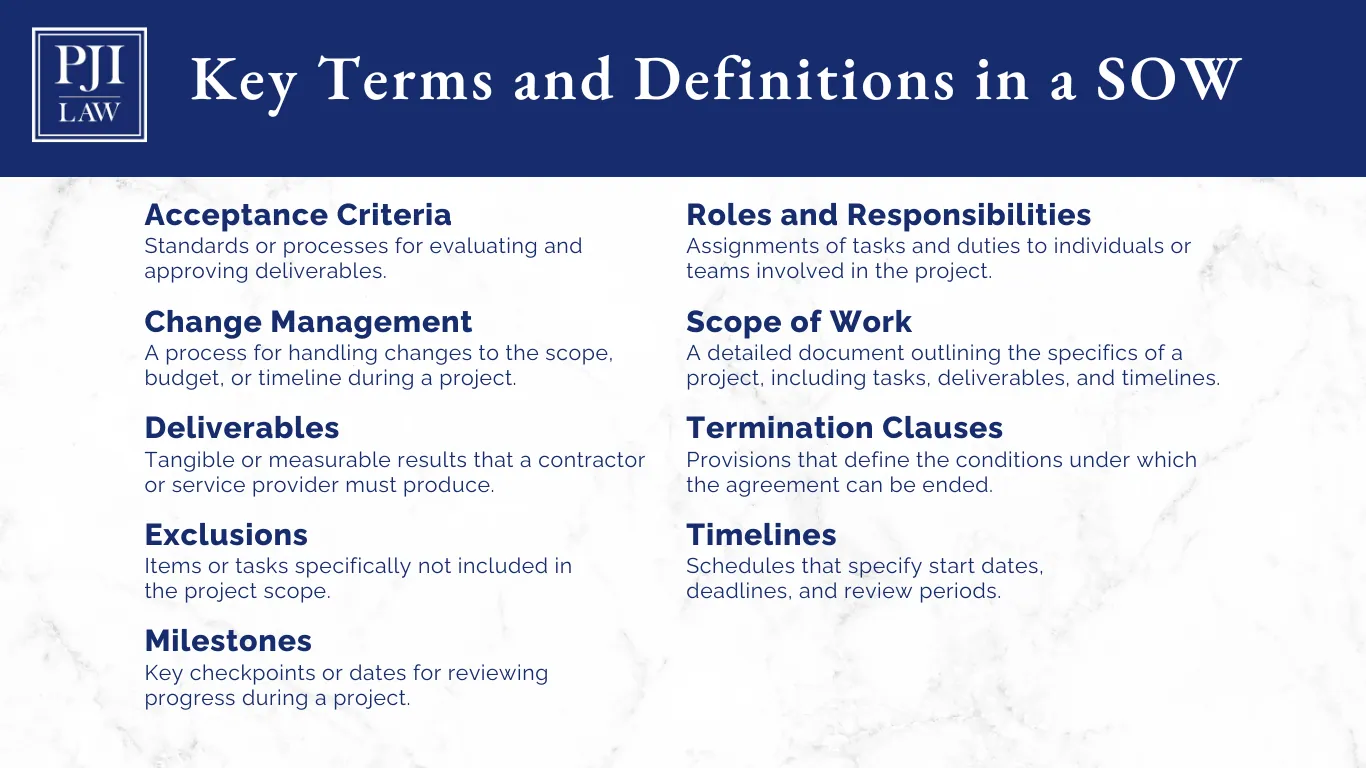
3. Deliverables

Deliverables are the tangible or measurable outcomes that the contractor or service provider is required to produce. These define the end results of the project, ensuring both parties understand what constitutes success.
Key Elements to Include:
- Description of Each Deliverable: Clearly outline what will be produced. Example: “Completed architectural drawings that meet zoning requirements.”
- Deadlines: Specify the due dates for each deliverable. Example: “Final site survey to be submitted by March 1, 2026.”
- Acceptance Criteria: Define the standards or processes for evaluating each deliverable. Example: “Drawings must receive approval from the Virginia State Planning Commission.”
By clearly specifying deliverables, along with deadlines and acceptance criteria, you eliminate ambiguity and create a framework for accountability.
4. Timelines and Milestones
Timelines establish when tasks and deliverables should be completed. For larger projects, breaking the timeline into milestones can make progress easier to track. A milestone might include phases such as "Design Approval" or "Initial Testing," with specific deadlines attached.
Virginia businesses often use this section to highlight key deadlines tied to state or local regulations, particularly for government projects.
5. Payment Terms
The payment section outlines how and when payments will be made. Include:
- Payment schedules
- Milestone-based payments (if applicable)
- Penalties for late payments or missed deadlines
For projects in Virginia, this section should comply with any state-specific payment regulations, such as those outlined in the Virginia Prompt Payment Act. 
6. Roles and Responsibilities

The Roles and Responsibilities section establishes accountability by defining who is responsible for specific aspects of the project. Clear assignments ensure smooth collaboration and prevent confusion during execution.
Key Elements to Include:
- Primary Points of Contact: Identify the main contacts for each party, responsible for communication and decision-making. Example: “The project manager for [Company Name] will serve as the primary contact for progress updates and approvals.”
- Responsibilities: Outline the duties assigned to each team or individual. _Example:_Client Responsibilities: Provide timely feedback on deliverables and grant necessary site access. Contractor Responsibilities: Submit progress reports, complete tasks on schedule, and adhere to project specifications.
- Escalation Processes: Detail steps for resolving disputes or delays. Example: “In case of unresolved issues, disputes will be escalated to senior management within five business days.”
Clearly defined roles and responsibilities foster efficient collaboration, minimize misunderstandings, and provide a clear path for addressing challenges.
7. Legal and Regulatory Requirements
Virginia has distinct legal and regulatory requirements that must be addressed in any project, especially for government or public-sector work. Including these ensures that the project complies with state laws and avoids potential penalties or disputes.
Key Considerations:
- Compliance with the Virginia Public Procurement Act: Required for contracts involving public funds, this act sets standards for procurement fairness and accountability. Example: “All procurement activities must adhere to the Virginia Public Procurement Act (Va. Code § 2.2-4300 et seq.).”
- Licensing Requirements for Contractors: Verify and document that all contractors hold the appropriate licenses for the work being performed. Example: “General contractors must maintain an active Class A license as required by the Virginia Department of Professional and Occupational Regulation (DPOR).”
- Environmental or Safety Standards: Ensure compliance with state-specific regulations, such as:
- Virginia Building Code: Relevant for construction projects.
- OSHA Standards: Critical for ensuring workplace safety.
By referencing applicable state laws and regulations, this section protects both parties and ensures a legally sound project framework.
8. Termination Clauses
While the goal of any project is successful completion, termination clauses provide a safety net by defining the conditions under which the agreement can be ended. Including these clauses ensures that all parties understand their rights and obligations in the event of unforeseen issues.
Common Grounds for Termination:
- Failure to Meet Deliverables: If critical milestones or deliverables are not met within the agreed timeline. Example: “The agreement may be terminated if the contractor fails to deliver the approved designs within 60 days of the agreed deadline.”
- Breach of Contract Terms: When one party fails to fulfill essential obligations outlined in the SOW. Example: “A material breach of any term of this agreement allows the non-breaching party to terminate the contract after providing written notice.”
- Mutual Agreement to Discontinue: If both parties decide to end the project due to changing circumstances or priorities. Example: “Termination by mutual consent must be documented in writing and signed by both parties.”
By outlining clear conditions for termination, this section protects both parties from prolonged disputes and provides a structured exit strategy if the project cannot proceed as planned. 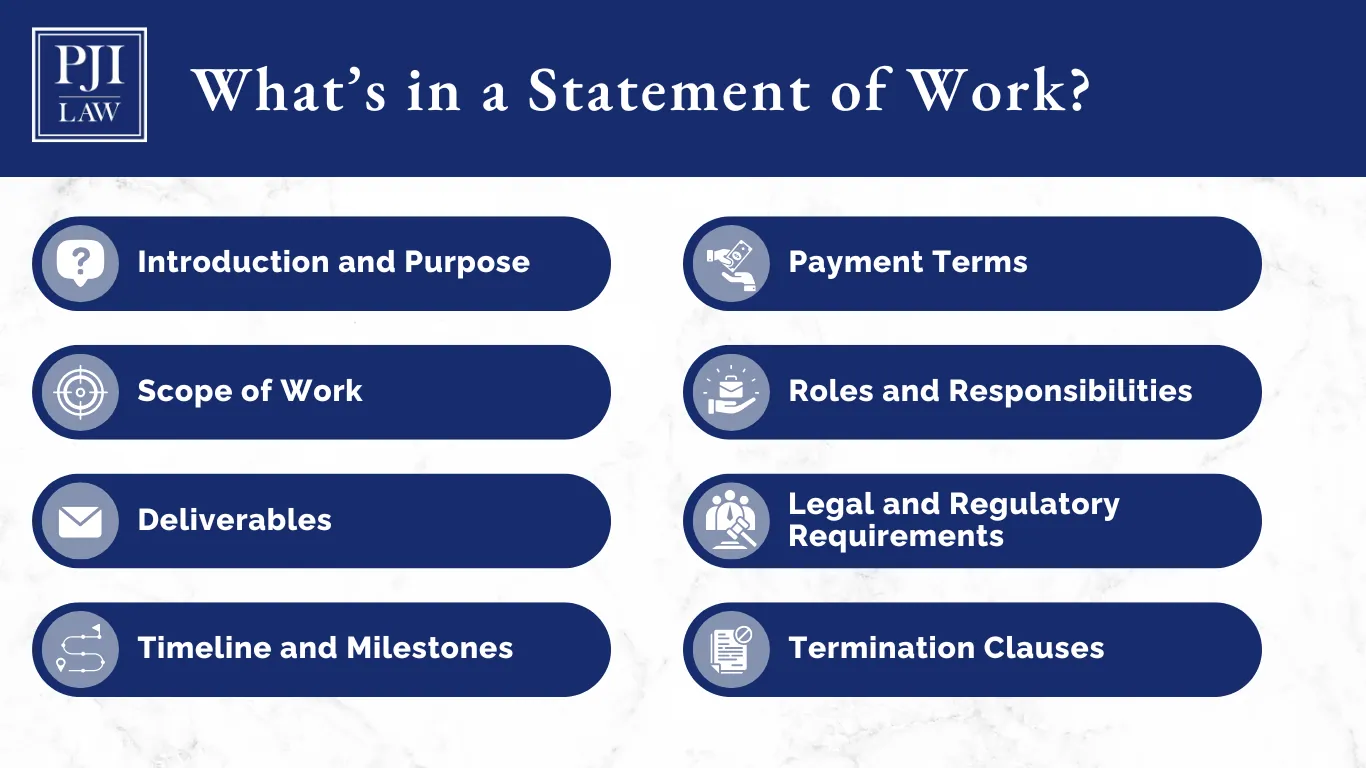
Best Practices for Drafting a SOW in Virginia
Creating an effective SOW requires more than just filling out a form. Following best practices ensures that your document is clear, comprehensive, and legally sound, reducing the risk of disputes and delays.
Be Specific
Avoid ambiguous terms like "reasonable" or "as needed," which can lead to differing interpretations. Instead, use precise and measurable language.
Example: Replace “complete the project quickly” with “deliver the final report within 10 business days.”
Use Plain Language
Clear, concise language helps all parties understand their obligations without needing a legal background.
Example: Instead of writing, “The supplier shall endeavor to perform to the best of its abilities,” use “The supplier will complete the installation as outlined in Section 3.”
Consult State Laws
Virginia has unique legal requirements, especially for public contracts. For instance:
- Virginia Public Procurement Act: Establishes rules for procurement processes in government projects.
- Virginia Building Code: Applicable for construction-related SOWs.
Consult a contract lawyer or reference specific statutes when drafting SOWs that may be subject to state laws.
Involve Stakeholders Early
Engage all key stakeholders, including contractors, clients, and legal teams, during the drafting process. Early input ensures the SOW reflects the needs and expectations of all parties.
Review and Revise
A SOW should not be finalized without a thorough review. Check for consistency, completeness, and alignment with the master agreement. Ensure all stakeholders sign off on the SOW after revisions to confirm mutual understanding.
Plan for Changes
Include provisions for managing changes to scope, budget, or timelines. This avoids disputes when adjustments are necessary. Example: Add a “Change Management” section detailing how additional tasks or modifications will be approved.
By adhering to these best practices, you can create a well-structured SOW that fosters collaboration and ensures project success, whether you’re working on private contracts or public-sector initiatives in Virginia.
Common Mistakes and How to Avoid Them
Even with careful preparation, some common mistakes can undermine the effectiveness of a SOW. Here’s what to watch out for and how to avoid these pitfalls:
Overlooking Local Regulations
Virginia’s legal framework includes specific requirements for contracts, particularly in government or public-sector projects. Neglecting these can render a SOW unenforceable or non-compliant. To avoid this, reference applicable laws, such as the Virginia Public Procurement Act, and consult an attorney if the project involves complex regulatory obligations.
Failing to Define Scope Clearly
Unclear scope descriptions can lead to disagreements about what the project includes or excludes. For example, vague language like “perform required maintenance” can create confusion. Instead, be specific by detailing the tasks, deliverables, and exclusions in a way that all parties can easily understand.
Not Specifying Acceptance Criteria
Without clear acceptance criteria, disagreements can arise about whether deliverables meet the agreed-upon standards. For instance, phrases like “provide a quality report” leave room for interpretation. Clearly define what “quality” means by specifying measurable criteria, such as format, content, and deadlines.
Ignoring Termination Provisions
A SOW without termination clauses leaves you without a clear exit strategy if the project encounters significant issues. Include conditions for termination, such as failure to meet deadlines or breach of contract, and specify notice periods to ensure all parties know the process for ending the agreement if necessary.
Using Vague Language
Vague terms like “as needed” or “reasonable efforts” often lead to differing expectations between parties. Use specific, actionable language instead, such as “complete Task Y within 10 business days of receiving approval for Task X,” to minimize misunderstandings.
By addressing these common issues, you can draft a SOW that is clear, enforceable, and designed to support the success of your project.
In closing, a Statement of Work is a vital document that sets the stage for project success. Whether you’re a contractor, business owner, or government agency in Virginia, a well-crafted SOW helps define expectations, allocate responsibilities, and minimize the risk of disputes. By tailoring your SOW to meet Virginia’s legal and regulatory requirements, you create a solid foundation for achieving your project goals. 
Protect Your Interests with a Professionally Drafted SOW
A well-prepared Statement of Work is key to defining expectations, avoiding disputes, and protecting your interests. At PJI Law, our contract attorneys help clients create and review SOWs that are clear, thorough, and tailored to their needs, balancing strong protections with language that fosters collaborative business relationships.
Whether you need to draft a SOW from the ground up or refine one prepared by another party, we’ll focus on addressing the specifics—like scope, deliverables, and legal requirements—so your project starts on the right path.
Take the next step in protecting your rights and strengthening your business agreements. Contact PJI Law at (703) 865-6100 or fill out our confidential online form to schedule a consultation. Let us help you create a strong foundation for success.
At PJI Law, you’ll receive white glove service and personalized attention!
Copyright © 2024. PJI Law, PLC. All rights reserved.
Copyright © 2026. PJI Law, PLC. All rights reserved.
The information in this blog post (“post”) is provided for general informational purposes only and may not reflect the current law in your jurisdiction. No information in this post should be construed as legal advice from the individual author or the law firm, nor is it intended to be a substitute for legal counsel on any subject matter. No reader of this post should act or refrain from acting based on any information included in or accessible through this post without seeking the appropriate legal or other professional advice on the particular facts and circumstances at issue from a lawyer licensed in the recipient’s state, country, or other appropriate licensing jurisdiction.
3900 Jermantown Road, 2nd Floor
Fairfax, VA 22030
(703) 546-9674
https://www.pjilaw.com
Request A Complimentary Call From Our Team
Provide your details, and we’ll reach out promptly to assist you.