

You’ve spent years building your life, your home, your investments, your business, and perhaps a business. You care deeply about the people you love and the legacy you’ll leave behind. When you start thinking about your estate plan in Virginia, one key question arises: Who can be my beneficiary? The answer shapes how your assets are distributed, how your family is supported, and how your wishes are honored.
If you live in Northern Virginia or anywhere in Virginia, this blog will explain the process of choosing beneficiaries, explain what to consider, and show how a Virginia estate planning attorney can help you build a customized estate plan that reflects your priorities and long-term goals.
What “Beneficiary” Means in an Estate Plan
When it comes to your estate plan and estate planning documents, the term beneficiary plays a central role. A beneficiary is a person (or entity) you designate to receive property, assets, or rights under your will, trust, account, or other instrument at your death or upon another triggering event.
Here’s what you need to know:
- Beneficiaries can be individuals (family members, loved ones, friends), or entities (charities, foundations, businesses, or even a limited liability company you own).
- When you name a beneficiary, you’re giving direction in your estate plan about who gets your assets, who benefits from your wealth after you die, and how you want your financial legacy handled.
- The designation of a beneficiary often works together with other estate planning tools (wills, trusts, etc.) to avoid probate, achieve significant tax savings, protect future generations, and give effect to your wishes.
- Under Virginia’s statutes governing wills, trusts, and decedents’ estates, if you don’t name beneficiaries (or your plan lacks sufficient direction), you may default to the intestate succession rules, meaning state law will decide who inherits rather than you.
With the role of a beneficiary in mind, the next section explores who you can name and the practical details that help those choices align with your overall estate plan.
Who Can You Appoint as a Beneficiary?
When creating your estate plan, you have broad latitude to choose who will inherit your assets. Virginia law allows you to name nearly any person or entity, as long as your designations comply with applicable rules and your estate planning documents are properly executed. Below are some of the most common types of beneficiaries to consider:
Individuals
- Your spouse
- Your children, including minor children
- Other family members such as siblings, nieces, nephews, or cousins
- Loved ones or friends you wish to include
- Individuals with special needs who may benefit from a properly structured trust
Entities
- Charities or non-profit organizations
- Foundations you establish
- Trusts created for children, grandchildren, or other beneficiaries
- Businesses or limited liability companies you own, where you can designate who will receive your ownership interest or related assets, including any real property connected to those entities
With your potential beneficiaries identified, the next step is to think carefully about how each person or entity fits into your overall plan. 
What to Think About When Choosing Your Beneficiaries

Selecting the right beneficiaries takes more than listing names on a document. You’ll want to think carefully about each person’s circumstances, the type of assets they’ll receive, and how those assets will be managed after your lifetime. The considerations below can help you make thoughtful, informed choices that protect both your wishes and your loved ones.
- Minor children: If you leave money or property to a minor child, you may need to specify who will manage the asset (a guardian or trustee) until the child reaches legal age.
- Special needs: If a beneficiary has special needs, you might use a special needs trust so the gift does not interfere with government benefits.
- Multiple beneficiaries: You can leave assets to more than one person or entity, and you might specify percentages or conditional gifts.
- Alternate beneficiaries: It is wise to name backups if a beneficiary predeceases you or cannot accept the asset.
- Contingent beneficiaries: These take effect under specific conditions, such as if your primary beneficiary passes away before you.
- Business or real property interests: If you leave property or business interests, you may need trust administration, tax planning, or provisions for ownership transition and trustee selection.
How Your Choice of Beneficiary Fits Into Your Broader Estate Plan
Naming a beneficiary is just one part of your overall estate plan. Your choices work together with other estate planning tools and legal services that protect your wealth, address legal issues, and provide for your family. Each component of your plan, from the legal documents you create to strategies for avoiding probate, managing taxes, and preparing for your later years, works together to carry out your wishes.
Creating a Foundation With Estate Planning Documents
A well-rounded estate plan includes more than naming beneficiaries. It should also cover the documents and directives that govern how your property, finances, and personal decisions are handled:
- A will (under Virginia Code § 64.2‑401, you may dispose of all or part of your estate)
- Trusts (for example, for minor children, special needs, business interests)
- Designated beneficiary forms (for retirement plans, life insurance, payable-on-death assets)
- Medical directives (advance health care directives) and powers of attorney
- Business succession documents if you own limited liability companies or other businesses
Avoiding Probate and Reducing Costs
Naming beneficiaries and creating trusts can also make the estate administration process easier for your family. By transferring assets directly to your chosen beneficiaries, you may be able to avoid a lengthy probate process. Probate administration in Virginia can be complex, especially for estates with significant assets or business holdings.
Using the right strategies can save time and costs for your loved ones. If you die without a valid will, the state’s intestate succession statute will determine who inherits your property.
Addressing Tax Issues and Maximizing Savings
Beneficiary designations also play a role in minimizing taxes. While Virginia no longer imposes a state estate tax, federal estate tax may apply to larger estates. Structuring your plan carefully can lead to significant tax savings, protect your assets from unnecessary tax burdens, and preserve wealth for future generations.
Coordinating Business and Investment Assets
If you own a business or investment properties, it’s important to align your beneficiary choices with your succession plan. Naming beneficiaries or establishing trusts for business interests helps provide stability, continuity, and financial protection for both your partners and your family.
Planning for Your Golden Years
As you approach your later years, your estate planning needs may evolve. You might focus more on how your assets will support you during retirement, how to plan for incapacity, and how to position your beneficiaries to receive property as you intend. An attorney can help coordinate these aspects to create a cohesive strategy for both your life and legacy.
Because beneficiary choices affect every aspect of your estate plan, it’s important to revisit them periodically and make adjustments as your life changes. 
Reviewing and Managing Beneficiary Designations

Choosing who will inherit your assets is rarely a one-time decision. Circumstances change over time, and your estate plan should evolve with them. The sections below outline what to review, update, and coordinate as your circumstances and priorities evolve.
Reviewing and Updating Your Existing Plan
Even the most well-crafted estate plan needs attention as life unfolds. Major events such as marriage, divorce, births, deaths, business formation or sale, or a move to Virginia may require updates. Reviewing your beneficiary designations regularly helps keep your customized estate plan accurate and aligned with your current intentions.
Coordinating Beneficiary Forms With Estate Planning Documents
It’s common for conflicts to arise when the beneficiary listed on a retirement account or life insurance policy doesn’t match what’s stated in your will or trust. In Virginia, those account designations typically override your will for those specific assets. To avoid confusion or unintended results, have your estate planning attorney review each beneficiary form and confirm that everything integrates properly with your overall plan.
Addressing Incapacity and Management Concerns
If you become unable to manage your affairs, the people you’ve named and how your assets are structured can greatly impact how your estate functions. A beneficiary who lacks the skills or stability to manage assets may struggle with the responsibility. Naming a trustee, guardian, or contingent beneficiary can provide structure and protection in case of incapacity.
Planning for Minor Children and Beneficiaries With Special Needs
When your beneficiaries include minor children, you’ll need to name a legal guardian and consider setting up a trust to hold assets until they reach a specified age. For beneficiaries with special needs, a properly drafted special needs trust can provide long-term financial support without disqualifying them from government benefits. Your estate attorney can prepare these documents and make sure they fit seamlessly within your broader estate plan.
Managing Business Succession and LLC Interests
If you own a business or limited liability company, your beneficiary choices may affect ownership transitions. You can name individuals to inherit your interest or create a succession plan that transfers control smoothly to partners or family members. Work with your estate planning attorney to align business agreements and tax planning for a coordinated approach that can prevent disputes down the road.
Making Future Changes to Your Beneficiaries
Beneficiary designations aren’t permanent. You can often change them as your life and priorities evolve, but each asset type has its own rules. Whether it’s a life insurance policy, retirement account, or trust, follow the appropriate procedures and keep detailed records of changes. Informing the necessary parties and confirming updates with your attorney helps keep your estate plan consistent and enforceable. 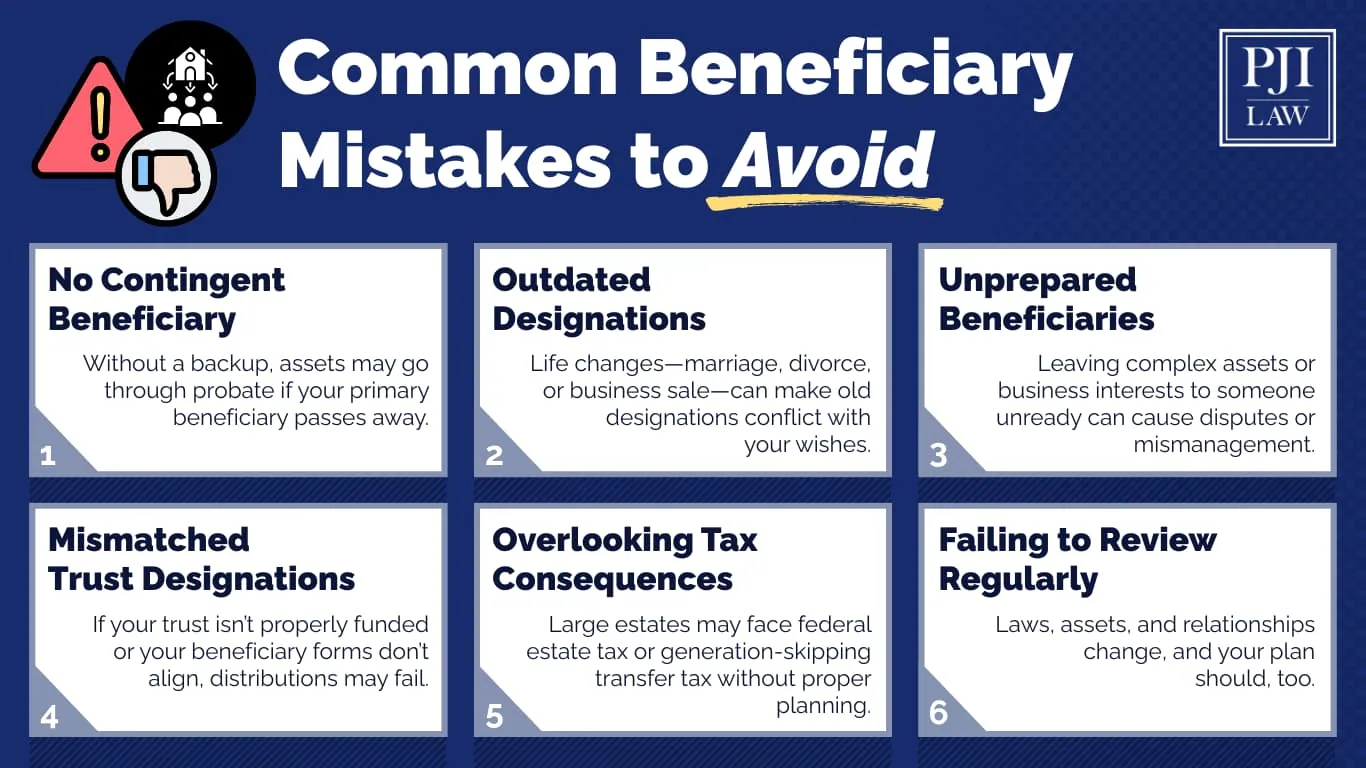
How a Virginia Estate Planning Attorney Can Help You
When you consult with a Virginia estate planning attorney, they will:
- Review your assets, business interests, family structure (including minor children, special needs members, blended families), and investment portfolio
- Walk through your goals for your future, your wishes for your loved ones, how you want to leave money/property, how you want trustees or executors to act, and how beneficiaries fit into the plan
- Draft a tailored estate plan using the appropriate legal services: wills, trusts, powers of attorney, medical directives, business succession agreements
- Coordinate beneficiary designations across all your assets so that the flow of property aligns with your plan, including life insurance, retirement accounts, and business interests
- Advise on probate process and probate administration, helping you structure the plan to avoid or minimize probate where it makes sense, and prepare your family for how the assets will pass to beneficiaries
- Address tax issues and work to structure your plan to provide significant tax savings, preserve wealth for future generations, and adjust to federal and state law
An attorney experienced in estate planning, estate litigation, and trusts in Virginia can make sure your beneficiary designations work as intended, that your estate planning documents are valid under Virginia law, and that your wishes for your assets, business, family, and legacy are fully respected.
What Steps You Should Take Now for Your Beneficiary Planning
- Take stock of all assets: property, business interests, investment accounts, retirement accounts, life insurance, and limited liability companies.
- List who you currently have named as beneficiaries on each account and whether those designations still match your wishes.
- Consider your family and loved ones: Do you have minor children? Do you have beneficiaries with special needs? Do you have blended family situations? Are there business interests to account for?
- Evaluate whether your current estate plan is aligned with your beneficiary designations and whether the plan addresses issues like trust administration, probate avoidance, tax issues, business succession, and future generations.
- If you do not have a plan, or if your current plan has not been reviewed recently or addresses changes in your life, schedule time to work with an estate attorney in the Virginia area to create or update a customized estate plan tailored to your assets, life, family, and beneficiaries.

Get Trusted Guidance for Your Beneficiary Decisions
Naming your beneficiaries is one of the most personal steps in your estate plan. It’s not just about distributing money or property. It’s about protecting the people and causes that matter most to you. If you’ve been searching online for “estate planning lawyers near me” who understand how personal this process can feel, PJI Law, PLC is here to guide you.
At PJI Law, we work with families across Fairfax County and Northern Virginia through every stage of beneficiary planning, from selecting the right individuals or charities to creating estate planning documents that reflect your goals. Each lawyer for estate planning on our team takes the time to understand your priorities, explain how Virginia law affects your estate, and build a plan that gives you peace of mind about the future. Whether you want to provide for family members, safeguard a business, or leave a charitable legacy, we’ll help you make those decisions with care and confidence. Call PJI Law at (703) 865-6100 or contact us online to schedule your complimentary, confidential estate planning consultation. Together, we’ll create a customized estate plan that protects your assets, supports your loved ones, and carries out your wishes exactly as intended.
At PJI Law, you’ll receive white glove service and personal attention from a team that treats you like family.
Copyright © 2025. PJI Law, PLC. All rights reserved.
Copyright © 2026. PJI Law, PLC. All rights reserved.
The information in this blog post (“post”) is provided for general informational purposes only and may not reflect the current law in your jurisdiction. No information in this post should be construed as legal advice from the individual author or the law firm, nor is it intended to be a substitute for legal counsel on any subject matter. No reader of this post should act or refrain from acting based on any information included in or accessible through this post without seeking the appropriate legal or other professional advice on the particular facts and circumstances at issue from a lawyer licensed in the recipient’s state, country, or other appropriate licensing jurisdiction.
3900 Jermantown Road, 2nd Floor
Fairfax, VA 22030
(703) 546-9674
https://www.pjilaw.com
Request A Complimentary Call From Our Team
Provide your details, and we’ll reach out promptly to assist you.