
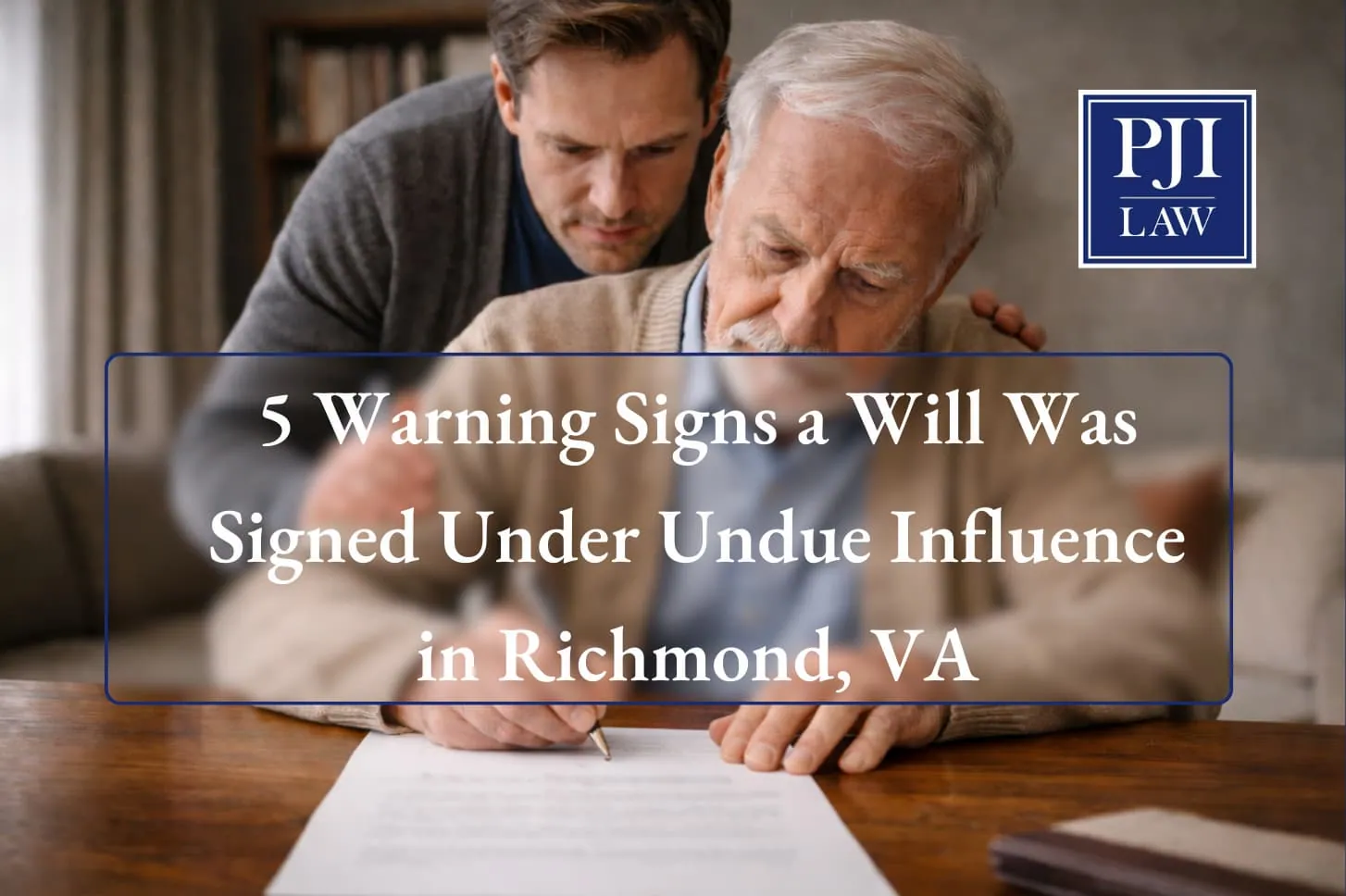
When a loved one dies, the last thing you expect is to hear that their will says something completely different from what they told you for years. Maybe you’re told that a new will replaced the one your parent kept for most of their life, or that most of the estate now goes to someone who managed their care near the end. When the terms feel out of character for the person you knew, it’s natural to wonder whether someone stepped in during a vulnerable period and influenced decisions your loved one wouldn’t have made on their own.
Situations like this arise more often than families expect. Even though will contests make up a small share of probate cases, the disputes that do appear often involve late-life dependence, health challenges, caregiver involvement, or sudden changes to long-standing estate plans. DIY wills or rushed updates made during periods of isolation may also create opportunities for undue influence by individuals who had access when others did not.
When doubt exists about a will’s validity, Virginia law allows you to challenge a legal document that may not reflect the testator’s true intentions. Below are 5 of the most common warning signs our contested will lawyers at PJI Law see when families come to us, and how those signs can help you assess whether a will may have been affected by undue influence.
At a Glance: Signs a Will May Have Been Affected by Undue Influence
If a loved one’s will looks inconsistent with their long-term plans, several indicators may point toward undue influence. Families often notice:
- Sudden changes in the estate plan
- A beneficiary taking control of the will’s creation
- Isolation from trusted contacts
- Concerns about the testator’s capacity
- Unusual circumstances surrounding the signing
Virginia law permits interested parties to contest a will when doubt exists about whether it reflects the testator’s true intentions. 
How Virginia Law Evaluates Undue Influence in a Will Contest
Before you look at warning signs, it helps to understand how Virginia treats undue influence in a will contest. State law does not offer a single definition, but Virginia courts view undue influence as conduct that overpowers the testator’s independent judgment and causes them to sign a will that does not reflect their own wishes. It goes beyond ordinary persuasion and often involves someone taking advantage of a vulnerable person during the will’s creation.
Virginia also recognizes situations where a presumption of undue influence applies. Under Va. Code § 64.2-454.1, if certain conditions are present during a will contest, the court must begin with the presumption that undue influence occurred unless evidence shows the testator intended the will as written. This presumption often arises when the testator was vulnerable, relied on someone in a confidential or fiduciary relationship, and the will’s terms differ significantly from prior intent.
When a will contest moves forward, the court then examines whether the document reflects the testator’s true intentions. If the court determines that circumstances suggest coercion, manipulation, or self-dealing (meaning someone acted in their own interest rather than the testator’s), the will may be invalid. In some situations, the court may revert to a previous will or apply Virginia’s intestacy laws.
Virginia’s Requirements for a Valid Will
To determine whether improper execution or undue influence occurred, it helps to understand what makes a valid will under state law. A Virginia will must meet a few requirements:
- It must be in writing.
- The testator must have testamentary capacity.
- It must be signed by the testator or by someone at the testator’s direction.
- It must be signed by two witnesses who observed the signing.
If the current will wasn’t properly witnessed or doesn’t appear to follow state law, that alone may open the door to a will contest. However, most undue influence claims center on patterns, relationships, and behavior rather than technical execution errors. The red flags that most families recognize first often involve surprising changes to the estate plan. 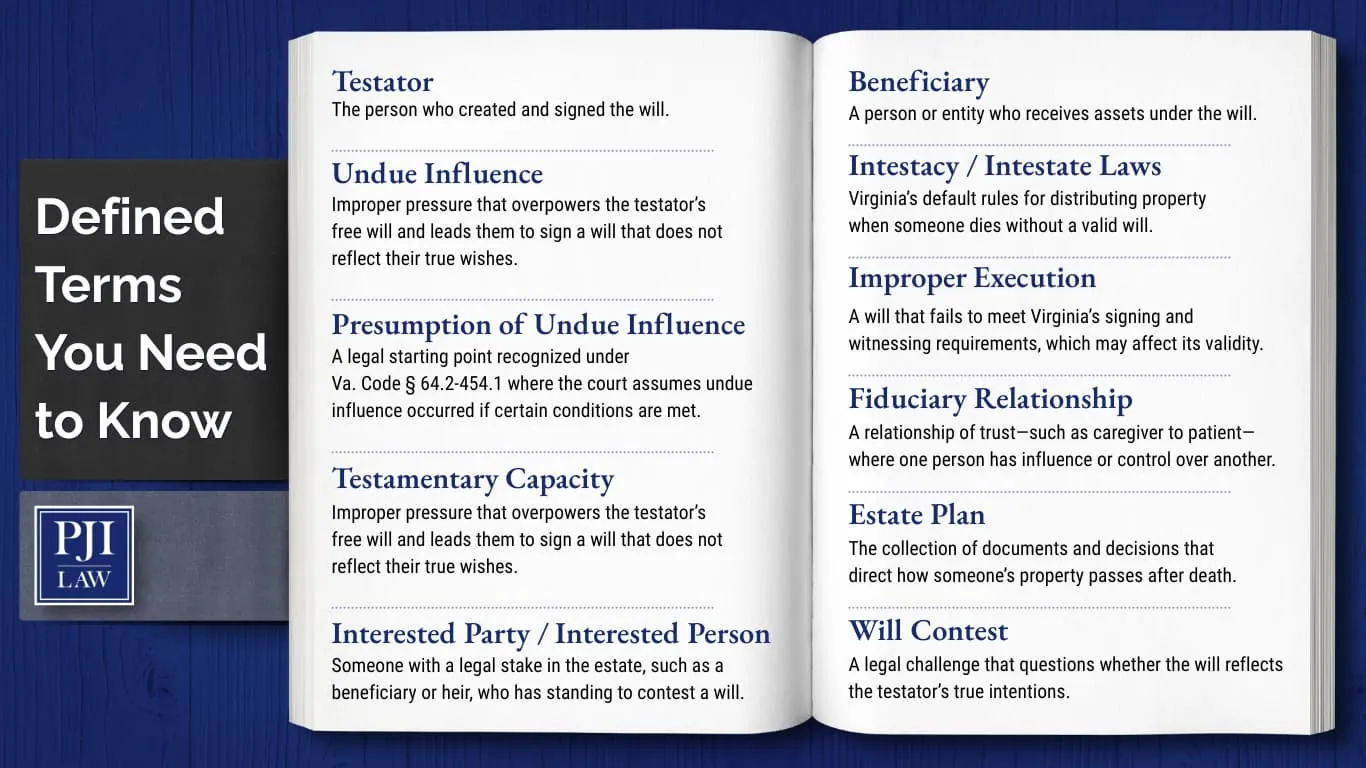
1. Sudden and Unexplained Changes to the Estate Plan
A dramatic change in a loved one’s will often signals that something influenced their thinking near the end of their life. When someone revises their estate plan in a way that departs sharply from long-standing intentions, it may indicate undue influence.
Signs this may apply to your situation:
- A previous will provided for family members, but the current will leaves the bulk of the decedent’s estate to one individual with unusual access or power.
- Estranged family members suddenly become beneficiaries without explanation.
- The will was previously revoked, yet a new version appears under suspicious circumstances.
- The current will was signed when the testator had declining mental capacity or longstanding medical conditions.
An interested party may file a will contest when the new terms don’t make sense based on the testator’s history. Will contest lawyers often examine earlier versions to compare consistent intent with the changes. A document admitted to probate that contradicts decades of stable planning is something courts take seriously.
2. A Beneficiary Played a Direct Role in the Will’s Creation
Another warning sign appears when the primary beneficiary arranges the legal process from start to finish. If the person who gains the most from the will contacted the law firm, scheduled the meetings, or gave instructions to the estate attorney, a dispute exists over whether their influence shaped the document.
Red flags that raise concern:
- The beneficiary selected the attorney who drafted the last will and testament.
- The testator’s communication with the attorney appears limited, filtered, or controlled by someone else.
- The beneficiary was present for discussions about the estate matters, but discouraged other interested parties from being involved.
- The will’s execution occurred in a location chosen by the beneficiary rather than the testator.
No single sign proves that undue influence occurred, but this pattern frequently appears in contest cases. Courts look at whether the beneficiary had an opportunity to control the flow of information or guide decisions that affected the remaining assets.
3. Isolation of the Testator From Family Members and Friends

One of the most common grounds for contesting a will involves isolation. When someone cuts the testator off from long-trusted family members, long-term friends, or other interested persons, doubt exists about whether the current will reflects independent decision-making.
What isolation may look like:
- The testator stopped communicating with people who played a consistent role in their life.
- A caregiver or close contact monitored or restricted phone calls.
- The testator lived with someone who controlled who could visit.
- Estranged family members suddenly gained control over the testator’s daily life.
Undue influence thrives when the testator relies entirely on one individual for transportation, meal preparation, medical appointments, or emotional support. If isolation coincides with changes to the will, it strengthens a contestant’s claims during estate litigation. 
4. Signs the Testator Lacked Testamentary Capacity
Undue influence often occurs when the testator had declining mental capacity. Capacity issues don’t require a formal diagnosis. Courts examine whether the testator understood the nature of their assets, the purpose of a will, and the natural objects of their affection at the time they signed it.
Indicators of diminished capacity:
- Medical records show confusion, memory loss, or cognitive decline.
- The testator couldn’t identify family members, minor children, or previously named beneficiaries.
- Witness testimony describes unusual behavior or disorientation.
- A pattern of dependency on one individual increased near the time of signing.
If someone lacked testamentary capacity at the time the will was executed, the document may be invalid. Even when capacity existed, a weakened mental state can make it easier for someone to exert influence that overpowered the testator’s free will.
5. Suspicious Circumstances Surrounding the Signing
The signing process itself can reveal irregularities that suggest undue influence. The law requires that a will be properly executed and properly witnessed. When the circumstances surrounding the signing appear unusual or inconsistent with standard estate-planning practices, those details matter.
Examples of suspicious circumstances:
- Witnesses appeared to be associates of the primary beneficiary rather than neutral observers.
- The testator signed the will in a hurry or under stress.
- Someone other than the testator communicated instructions to the attorney.
- The will wasn’t read to the testator, even though their vision or literacy skills were impaired.
- A no-contest clause appears in a document that strongly favors one beneficiary, raising questions about whether the testator intended to deter valid challenges.
When improper execution combines with unexpected terms and questionable involvement from a beneficiary, the will’s validity becomes harder to defend.
How to Contest Someone’s Will in Richmond, VA
When you believe undue influence affected your loved one’s will, the next question involves the legal action required to challenge its validity. Contesting wills follows specific rules under state law, and the filing period is limited.
Key steps in the legal process:
- Verify your standing as an interested party. Virginia law permits an interested party or interested person to contest a will. This may include beneficiaries named in a previous will, intestate heirs, and others with a legitimate stake in the decedent’s estate.
- Identify the grounds for contesting. Common grounds include lack of testamentary capacity, improper execution, and undue influence. Contest lawyers evaluate whether doubt exists about the will’s creation and whether suspicious circumstances support your claims.
- File the challenge in the proper court. A will contest must be filed in the circuit court after the will has been admitted to probate.
- Gather supporting evidence. Evidence may involve medical records, witness testimony, financial documents, caregiver logs, prior estate-planning records, and communication patterns showing that someone exerted undue influence.
- Follow the time limit. Virginia imposes a filing period, and state law requires that you act quickly once the document is admitted to probate. In most cases, a will contest must be filed within one year after the will is admitted. If the deadline passes, you may lose your ability to challenge the will.
Because Virginia requires clear and convincing evidence in undue influence challenges, will contest lawyers focus on patterns, relationships, and circumstances that collectively show the will did not reflect the testator’s true wishes.
What Happens if the Court Finds Undue Influence Occurred
If the court agrees that undue influence affected the will’s validity, several potential decisions may follow:
- The court may invalidate the current will.
- A previous will may be restored if it was properly executed and not previously revoked.
- If no earlier will exists, Virginia’s intestacy laws determine how the decedent’s estate passes to heirs.
- A fiduciary relationship involving self-dealing may lead the court to review additional estate matters.
The probate court may also consider whether the person who exerted undue influence has breached a fiduciary duty owed to the decedent. In some legal complexities, other interested parties may negotiate terms that produce a favorable settlement in a timely manner, particularly when the dispute involves multiple families or large estates.
How Contest Will Lawyers Evaluate Your Case
 Contest will lawyers analyze the facts, the relationships, and the timeline of events to determine whether a dispute exists. They examine:
- The current will, and previous will versions
- The testator’s medical records
- Witness involvement
- Communication patterns
- Financial transactions
- Caregiver arrangements
- Record-keeping by the person who stood to benefit
They also look for patterns found in contest cases involving undue influence, lack of testamentary capacity, or improper execution. Because state law requires that a will be properly witnessed and executed, any break in the chain of legal compliance may strengthen your position.
A contested will is a legal proceeding that requires careful review of document creation, the testator’s state of mind, and the circumstances surrounding the signing. When doubt exists, your attorney may challenge whether the will reflects the testator’s true intentions under Virginia law. 
Frequently Asked Questions
Q: What qualifies as undue influence in a Virginia will contest?
A: Virginia courts look at whether someone overpowered the testator’s independent judgment during the will’s creation. This often involves late-life dependence, isolation, control over communication, or a beneficiary directing the estate-planning process. The court may apply a presumption of undue influence when certain conditions are present.
Q: Can a will be contested if the testator had cognitive decline but no diagnosis?
A: Yes. A formal diagnosis is not required. Courts examine whether the testator understood the nature of their assets, the purpose of a will, and the natural objects of their affection at the time of signing. Medical records, witness observations, and evidence of memory issues often play a role in capacity evaluations.
Q: How long do I have to contest a will in Virginia?
A: A will contest must be filed in the circuit court after the document is admitted to probate. In the majority of cases, you must file within one year after the will is admitted to probate. If the deadline passes, you may lose the ability to challenge the will, even if strong concerns exist about undue influence or improper execution.
Q: What evidence helps prove undue influence?
A: Useful evidence often includes medical records, prior versions of the will, caregiver logs, financial transactions, communication patterns, and witness testimony. Contest lawyers also review whether a beneficiary arranged the planning process or controlled access to the testator. Q: What happens if the court decides undue influence occurred?
A: The court may invalidate the current will. If a previous will was properly executed and not previously revoked, that version may be restored. If no earlier will exists, the estate passes under Virginia’s intestacy laws. The court may also examine whether the person who benefited violated a fiduciary duty.
Consult With a Contest Will Lawyer About Possible Undue Influence
When a loved one’s will raises questions, it can leave you unsure where to turn or how to move forward. At PJI Law, our team understands the weight these estate disputes carry and the impact they have on families across Richmond, Virginia. If you believe undue influence affected your loved one’s will, you can speak with a contest will lawyer who handles these sensitive estate matters with careful attention and professionalism. Call (804) 653-3450 to request a confidential consultation. You can also complete our confidential online form if it is more convenient for you. Our firm provides thoughtful legal representation to interested parties who need guidance with the probate process, will contests, and concerns about a will's validity.
At PJI Law, you’ll receive white glove service and personal attention from a team that treats you like family.
Copyright © 2026. PJI Law, PLC. All rights reserved.
Copyright © 2026. PJI Law, PLC. All rights reserved.
The information in this blog post (“post”) is provided for general informational purposes only and may not reflect the current law in your jurisdiction. No information in this post should be construed as legal advice from the individual author or the law firm, nor is it intended to be a substitute for legal counsel on any subject matter. No reader of this post should act or refrain from acting based on any information included in or accessible through this post without seeking the appropriate legal or other professional advice on the particular facts and circumstances at issue from a lawyer licensed in the recipient’s state, country, or other appropriate licensing jurisdiction.
3900 Jermantown Road, 2nd Floor
Fairfax, VA 22030
(703) 546-9674
https://www.pjilaw.com
Request A Complimentary Call From Our Team
Provide your details, and we’ll reach out promptly to assist you.