
Have you been working with a client for months on a major project, and everything seemed to be going well—until now? Suddenly, payments are delayed, or perhaps the work you’ve been providing isn’t being accepted as agreed. You’ve reached out to discuss the issue, but the other party either refuses to cooperate or accuses you of breaching the contract. Now, you’re faced with tough decisions. Should you try to resolve the situation on your own, or is it time to involve a contract lawyer?
Contract disputes can quickly become complicated, and when payments stall or work is rejected, it’s essential to know your rights and the key elements of breach of contract. Whether you’re accusing someone of breaching the contract or defending yourself against such claims, understanding these elements can help you protect your rights and navigate the next steps. In this blog, we’ll break down the core elements of a breach of contract in Virginia and guide you through what you need to prove in these situations.
What Is a Contract?

Before we discuss the elements of a breach of contract, it's important to understand what makes a contract valid in the first place. A valid contract lays the foundation for determining whether a breach has occurred. Let’s start by exploring what defines a legally binding contract in Virginia.
A contract is an agreement between two or more parties, whether individuals or businesses, that creates legally enforceable obligations. In Virginia, as in most states, a contract is formed when certain key elements are present:
- Offer: One party makes a clear proposal to do something, such as providing goods, services, or payment.
- Acceptance: The other party agrees to the terms of the offer without making any significant changes.
- Consideration: Both parties exchange something of value. This is often money, but it can also be goods, services, or even a promise to do or not do something. Each party must be giving and receiving something of value, creating mutual obligations that both sides are expected to fulfill.
- Mutual Assent: Both parties must understand and agree to the terms of the contract. This is often referred to as a "meeting of the minds." This understanding includes both parties’ obligations to perform their part of the agreement.
- Capacity: Each party must have the legal ability to enter into the agreement, meaning they are of legal age and of sound mind.
- Legality: The subject matter of the contract must be legal. A contract to perform illegal activities is not enforceable.
Contracts can be written, oral, or even implied through actions, but some agreements—such as those involving real estate or contracts that cannot be performed within a year—must be in writing to be enforceable under the Statute of Frauds.
In essence, a contract is a legally binding promise. Both parties are expected to meet their obligations, and when one party fails to uphold their end of the agreement, the other party may have the right to take legal action or seek damages for any losses. 
What is a Breach of Contract?
A breach of contract occurs when one party fails to fulfill their obligations as outlined in a valid contract. This can happen in several ways, such as not performing the agreed-upon duties, performing them improperly, or signaling that they will not perform them at all. When a breach occurs, the non-breaching party may have the right to seek legal remedies, such as damages, to recover losses caused by the breach.
Material vs. Non-Material Breaches
Not all breaches are equal. Virginia law distinguishes between material and non-material breaches. A material breach is one that’s serious enough to defeat the purpose of the contract, giving you the right to cancel the contract and seek damages. A non-material breach, on the other hand, is minor and usually doesn’t let you cancel the contract, though it may still allow you to claim damages. A breach is considered material if:
- The contract explicitly states it as such
- The breach affects an essential part of the agreement
- The breach causes significant harm or takes away a major benefit you expected under the contract
Sometimes, even small breaches can add up if they happen repeatedly, resulting in a material breach.
Elements of Breach of Contract in Virginia
To claim a breach of contract, you need to prove three core elements:
- Existence of a valid contract
- Breach of the contract by the other party
- Damages resulting from the breach
Let’s break these down in more detail, along with a potential fourth element that’s sometimes emphasized. 
Element 1: Existence of a Valid Contract
To claim a breach, you first need to show that a valid contract exists. That means proving all the necessary parts of the contract (offer, acceptance, consideration, mutual assent, capacity, and legality) are in place.
In Virginia, contracts can be written, oral, or even implied by actions. However, some types of contracts—like those for the sale of land, agreements that take more than a year to perform, or promises to pay someone else’s debt—need to be in writing to be enforceable.
Element 2: Breach of the Contract by the Other Party
Next, you need to show that the other party didn’t meet their end of the agreement. This is where the breach happens. A breach can take several forms:
- Non-performance: The other party doesn’t do what they promised.
- Defective performance: The other party does the job, but not correctly or fully.
- Anticipatory breach: The other party tells you (either through words or actions) that they won’t perform their part of the contract.
Element 3: Damages Resulting from the Breach
Finally, you need to show that you suffered damages because of the breach. Damages are usually in the form of money, and the goal is to put you in the same position you would have been in if the contract had been fulfilled.
There are different types of damages you can claim:
- Compensatory damages: These cover the direct losses you suffered.
- Consequential damages: These cover any indirect losses that were a foreseeable result of the breach.
- Liquidated damages: These are specific amounts listed in the contract to cover potential breaches.
- Specific performance: In some cases, instead of money, the court may order the breaching party to do what they promised (this usually happens in contracts involving unique items, like real estate).
It’s important to provide solid proof of your damages. You can’t claim speculative or uncertain losses.
The Fourth Element: Your Own Performance or Willingness to Perform
While Virginia law generally requires the three core elements above, some legal interpretations also include a fourth element: showing that you either performed your part of the contract or were ready and willing to do so. This element is often considered part of proving the breach, but in some cases, it’s listed separately.
For example, if you’re a contractor and you didn’t finish the work on a project, you can’t claim a breach because your client didn’t pay you. On the other hand, if you finished the job or were prepared to finish, but the client refused to pay, then you’ve met this requirement.
Virginia law also recognizes substantial performance, meaning your performance doesn’t have to be perfect. If you’ve completed most of your obligations with only minor issues, you may still have the right to claim a breach.
Common Defenses to Breach of Contract Claims
Whether you're the one accused of breaching a contract or you're claiming that the other party breached the contract, it's important to understand the common defenses that can apply in these situations. Knowing these defenses can help you anticipate the other side’s arguments and protect your interests:
Statute of Limitations
 In Virginia, there is a time limit for filing a breach of contract lawsuit—five years for written contracts and three years for oral contracts. If too much time has passed since the breach, the defendant can argue that the lawsuit is "time-barred" under the statute of limitations. On the other hand, if you're the party claiming the breach, you must act within this time frame to avoid losing your right to sue.
Statute of Frauds
Certain contracts, like those involving real estate or agreements that take more than a year to complete, must be in writing to be enforceable. If the contract doesn’t meet these requirements, the party accused of the breach may argue that the contract is unenforceable under the Statute of Frauds. If you're the party claiming the breach, make sure your contract complies with this requirement.
Lack of Capacity
A contract may be voidable if one of the parties lacked the legal capacity to enter into it. If the accused party was a minor, mentally incompetent, or otherwise unable to understand the terms, they may use this as a defense. On the flip side, if you’re accusing someone of breaching the contract, you’ll need to show that both parties had the capacity to make the agreement.
Duress or Undue Influence
If the party accused of breaching the contract was forced or improperly influenced into entering the agreement, they may argue that the contract is void. If you're the one claiming breach, you’ll need to show that the agreement was entered into freely and without pressure.
Mutual Mistake
If both parties were mistaken about an essential fact that significantly affects the agreement, the contract may be voidable. The accused party can use this as a defense if the mistake was mutual. If you’re claiming a breach, you'll need to prove that there was no misunderstanding about the key terms of the agreement.
Impossibility or Impracticability
Sometimes unforeseen events make it impossible or extremely difficult to fulfill the contract. If you’re accused of breaching the contract, you may argue that performance became impossible due to circumstances beyond your control. If you’re claiming a breach, you’ll need to show that performance was still possible and that the other party simply failed to meet their obligations.
Fraud or Misrepresentation
If one party entered into the contract based on fraudulent statements or false information, the contract may be voidable. The accused party may argue that they were misled into the agreement, while the party claiming the breach will need to show that no fraud or misrepresentation occurred.
Waiver
If the party accusing the breach knowingly accepted the other party’s performance, even though it didn’t fully meet the contract’s terms, and failed to object within a reasonable time, they may have waived their right to claim a breach. If you're the party claiming a breach, you'll need to show that you did not accept defective performance without protest.
Cure of Breach
In some cases, the party accused of breaching the contract may be able to "cure" the breach by fixing the problem before the deadline or within a reasonable time. If you’re claiming a breach, you’ll need to prove that the breaching party either did not cure the issue or did not attempt to fix it in time. 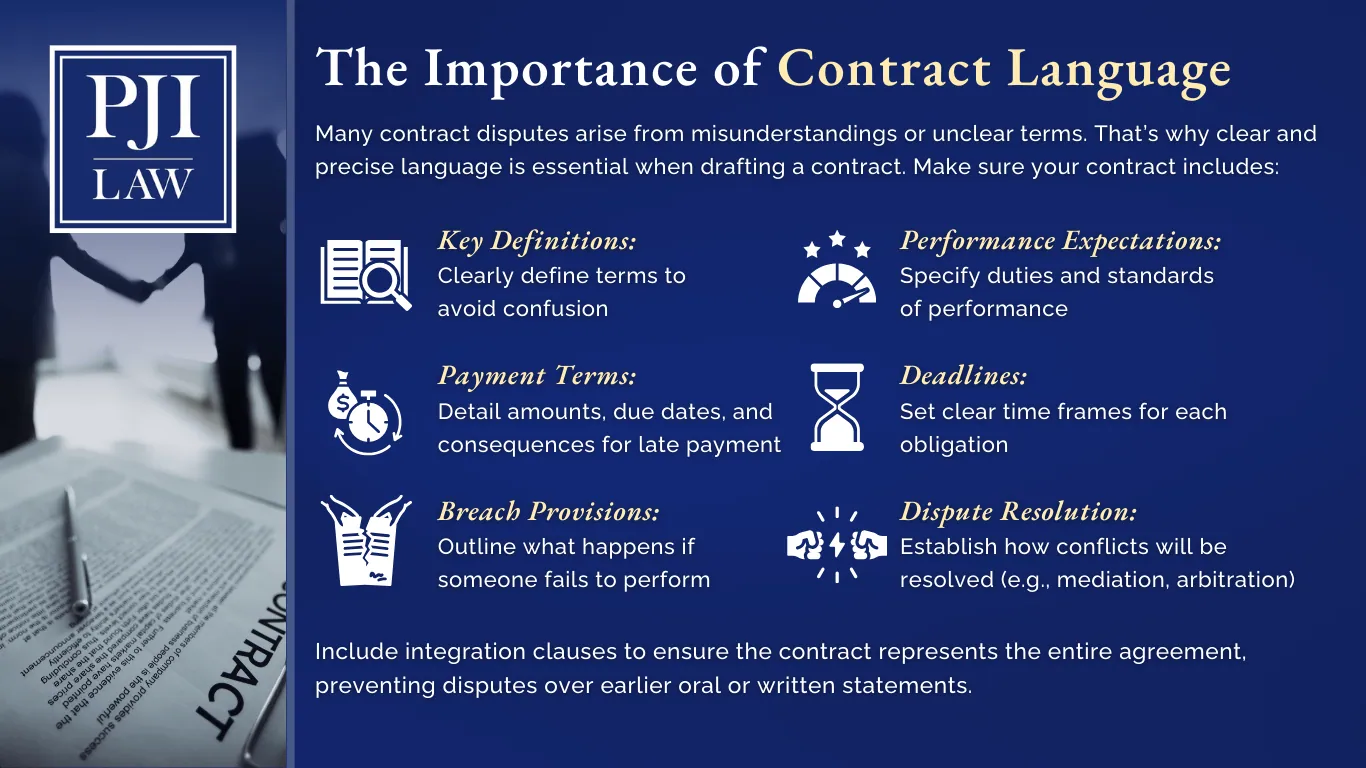
Practical Steps When Facing a Breach of Contract
When a breach of contract situation arises, it’s critical to take the right steps as early as possible, whether you're the one claiming a breach or facing accusations. Both parties must be proactive in protecting their rights and addressing the issue to prevent further legal complications.
1. Review the Contract Thoroughly
If you're claiming a breach or defending against one, your first step is to carefully review the contract. Make sure you fully understand your rights and obligations, as well as any conditions or clauses that apply. Look for any terms related to a breach, performance standards, dispute resolution, or specific remedies. Understanding what the contract says will help guide your next steps.
- For the party claiming a breach: Check the terms the other party allegedly violated and ensure the contract clearly outlines what they were supposed to do.
- For the accused party: Make sure to identify any clauses that might excuse performance, like force majeure, or any provisions that allow you to cure a breach.
2. Document Everything
Detailed documentation is crucial for both sides. Keep records of every communication and all actions related to the contract. This includes emails, texts, letters, invoices, work logs, and even verbal agreements that were later confirmed in writing. These records will provide a timeline of events, which can be invaluable if you need to prove your case.
- For the party claiming a breach: Document all instances where the other party failed to perform or didn't meet the contract terms.
- For the accused party: Keep records showing your attempts to perform or any issues you encountered that might justify delays or non-performance.
3. Communicate with the Other Party
Often, disputes arise from misunderstandings or miscommunications. Reach out to the other party and try to discuss the issue calmly. Many times, the breach can be resolved through a conversation, potentially avoiding the time and cost of legal action. Be clear about the problem and listen to the other party's perspective.
- For the party claiming a breach: Explain the issue and give the other party a chance to remedy it before escalating the situation.
- For the accused party: Listen carefully to the concerns and see if there’s a way to fix the problem or come to a compromise.
4. Send a Demand Letter
If communication doesn't resolve the issue, your next step should be a formal demand letter. This letter outlines the specific breach, what you expect as a remedy (such as payment, services, or contract termination), and a timeframe for resolving the issue.
- For the party claiming a breach: Clearly state the breach and what you need to be made whole, such as monetary compensation or specific performance.
- For the accused party: If you receive a demand letter, respond promptly and see if you can negotiate a solution before the matter escalates.
5. Explore Dispute Resolution Options

Before heading straight to court, consider other avenues like mediation or arbitration. These methods can be less adversarial and may offer faster, more cost-effective solutions. Mediation involves a neutral third party helping both sides come to an agreement, while arbitration can result in a binding decision without the need for a full court trial.
- For the party claiming a breach: Propose alternative dispute resolution if you think it will help resolve the issue quicker and with less expense.
- For the accused party: Agree to explore these options if you prefer to avoid the stress and cost of court proceedings.
6. Act Quickly
Time is critical when dealing with a breach of contract. **Don’t wait too long to take action**, whether you are pursuing a claim or defending against one. Delays could weaken your position, as evidence may be lost, or the statute of limitations may expire.
- For the party claiming a breach: Start the process early to ensure you’re within the statute of limitations, and that you can still recover damages or enforce the contract.
- For the accused party: Respond to claims immediately so you can present your defenses before the situation worsens.
By following these steps, both parties can better protect themselves in a breach of contract situation. Staying organized, communicating effectively, and considering all legal options can lead to faster and less costly resolutions.
When to Seek Legal Help

There comes a point in many contract disputes where legal guidance becomes essential. If informal efforts to resolve the breach fail or if the contract’s terms are complex, seeking professional legal help is often the best course of action. A Fairfax breach of contract lawyer can help you understand your rights, evaluate the strength of your case, and develop a strategy tailored to your situation.
You should consider legal help If:
- Negotiations stall: If you've tried to resolve the issue directly with the other party but haven’t reached a solution, it may be time to involve a lawyer.
- The stakes are high: When significant money, property, or business interests are involved, you’ll want professional legal advice to ensure you're protected.
- The other party hires a lawyer: If the other side brings in legal representation, it’s usually wise to do the same to ensure a fair outcome.
- The contract is complicated: Some contracts involve complex legal terms or clauses that are difficult to interpret. An attorney can clarify these terms and help you navigate the legal landscape.
- Litigation is likely: If you anticipate the dispute going to court, consulting with a lawyer early on can give you a better chance of success.
An attorney will not only help you assess your legal options but also work to protect your interests, whether that means negotiating a fair settlement or representing you in court. If you’re uncertain about your next steps, don’t hesitate to reach out for legal guidance before the situation escalates further.
Understanding the elements of breach of contract in Virginia can help you protect your rights. Contracts play a vital role in both personal and business relationships, and knowing how to handle disputes when they arise is key to avoiding bigger problems.
While many contract disputes can be resolved through negotiation or alternative dispute resolution, legal action may be necessary if these options fail. Acting quickly and with the right knowledge can help you secure the best outcome. 
Resolve Your Contract Dispute with PJI Law
If you’re facing a contract dispute—whether you believe the other party has breached the agreement or you're defending yourself against a breach claim—PJI Law is here to help. Our experienced Fairfax breach of contract lawyers understand the complexities of contract law in Virginia and can guide you through the entire process.
We’ll work closely with you to review your contract, identify potential risks, and develop a legal strategy tailored to your situation. Whether it’s negotiating a resolution or pursuing legal action, we’ll be by your side to protect your rights and interests every step of the way.
Don’t wait until a contract dispute escalates. If you’ve been searching online for a “contract dispute attorney near me,” contact PJI Law instead. You can call us at (703) 865-6100 or complete our confidential online form to schedule your consultation.
By taking proactive steps to address your contract concerns, you're investing in the protection of your rights and the success of your business relationships.
At PJI Law, you’ll receive white glove service and personalized attention!
Copyright © 2024. PJI Law, PLC. All rights reserved.
Copyright © 2026. PJI Law, PLC. All rights reserved.
The information in this blog post (“post”) is provided for general informational purposes only and may not reflect the current law in your jurisdiction. No information in this post should be construed as legal advice from the individual author or the law firm, nor is it intended to be a substitute for legal counsel on any subject matter. No reader of this post should act or refrain from acting based on any information included in or accessible through this post without seeking the appropriate legal or other professional advice on the particular facts and circumstances at issue from a lawyer licensed in the recipient’s state, country, or other appropriate licensing jurisdiction.
3900 Jermantown Road, 2nd Floor
Fairfax, VA 22030
(703) 546-9674
https://www.pjilaw.com
Request A Complimentary Call From Our Team
Provide your details, and we’ll reach out promptly to assist you.