

As the business landscape continues to evolve, many companies in Virginia are increasingly turning to independent contractors to supplement their workforce on an as-needed basis. This flexible model offers numerous advantages, from cost savings to enhanced agility. However, formalizing these working relationships through an independent contractor agreement is crucial for protecting both parties and ensuring a successful partnership. An independent contractor agreement is a legally binding document that outlines the terms, responsibilities, and expectations of the contractor-client relationship. Whether you're a small business owner, a freelancer, or an enterprise-level organization, understanding the purpose and key components of these agreements is essential in today’s ever-evolving business world. In this comprehensive guide, we'll explore the defining characteristics of independent contractor agreements, discuss the essential elements of a well-crafted agreement, and highlight the legal requirements and potential pitfalls to avoid. By the end, you'll have a clear roadmap for leveraging this useful tool to support your business goals and empower your workforce. 
What Exactly Is an Independent Contractor Agreement?
An independent contractor agreement is a legal contract that defines the working relationship between a company (the "hiring party") and an individual or business (the "independent contractor"). Unlike an employment agreement, which governs the terms of a traditional employer-employee dynamic, an independent contractor agreement outlines the specific services the contractor will provide, the compensation they will receive, and the parameters under which they will operate.
In simple terms, an independent contractor agreement is a way to formally document an arrangement where an individual or business is hired to perform a defined scope of work, rather than being an employee of the company. This type of agreement provides clarity for both parties and helps ensure a mutually beneficial relationship. If you're considering engaging an independent contractor or have been asked to sign such an agreement, it's highly recommended to consult an independent contractor attorney in Virginia. They can review the contract terms, ensure compliance with state laws, and help you understand your rights and obligations as either the hiring party or the independent contractor. 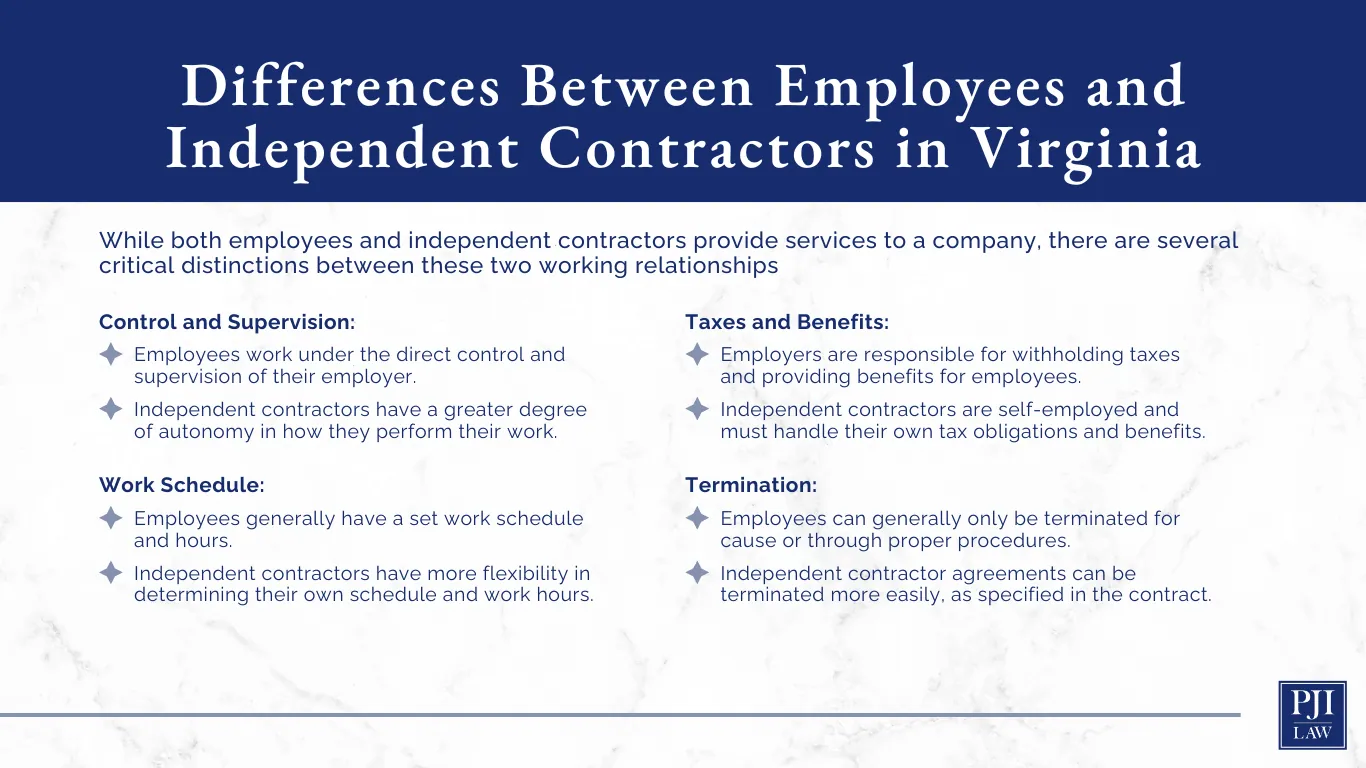
Key Differences Between Employees and Independent Contractors
While both employees and independent contractors provide services to a company, there are several critical distinctions between these two working relationships:
Control and Supervision:
- Employees work under the direct control and supervision of their employer.
- Independent contractors have a greater degree of autonomy in how they perform their work.
Taxes and Benefits:
- Employers are responsible for withholding taxes and providing benefits for employees.
- Independent contractors are self-employed and must handle their own tax obligations and benefits.
Work Schedule:
- Employees generally have a set work schedule and hours.
- Independent contractors have more flexibility in determining their own schedule and work hours.
Termination:
- Employees can generally only be terminated for cause or through proper procedures.
- Independent contractor agreements can be terminated more easily, as specified in the contract.
Ensuring you properly classify the nature of your working relationships is essential. Misclassifying an employee as an independent contractor can have serious legal and financial consequences. Consulting a legal contract lawyer in Virginia can help you navigate these nuances and structure the appropriate agreements.
Determining if Your Relationship Qualifies as an Independent Contractor Arrangement
Distinguishing between an employee and an independent contractor relationship is not always straightforward. There are a number of factors that courts and government agencies use to evaluate the true nature of a working arrangement. Some of the key considerations include:
Control and Independence:
- The degree of control the hiring party has over the worker's performance and schedule
- The worker's ability to exercise independent judgment and discretion
Financial Relationship:
- Who provides the necessary tools, equipment, and supplies
- How the worker is compensated (e.g., by the project, hourly, or salaried)
Permanence of the Relationship:
- Whether the work is temporary or ongoing
- If the worker has other clients or is exclusively working for the hiring party
If you're unsure whether your situation qualifies as an independent contractor arrangement, it's highly recommended to consult a contract lawyer. They can review the specific details of your working relationship and provide guidance on the appropriate classification and contractual terms.
Navigating the Legal Requirements for Independent Contractors in Virginia
In addition to the general considerations around employee classification, companies engaging independent contractors in Virginia must also be mindful of the specific legal requirements governing these working relationships. From business licensing to tax obligations, there are a number of compliance factors to keep in mind.
For example, Virginia requires independent contractors to obtain a business license and register for state and federal tax IDs. There are also regulations around worker's compensation coverage and unemployment insurance that may apply, depending on the nature of the contract. Failure to properly adhere to these legal obligations can expose the hiring company to penalties and liabilities. A legal contract lawyer well-versed in Virginia's independent contractor laws can help you navigate these complexities. They can ensure the agreement is structured to comply with all relevant statutes and regulations, protecting both the company and the contractor. This level of legal experience is invaluable in establishing a robust, compliant independent contractor relationship.
Protecting Your Business Interests with a Well-Crafted Agreement
Engaging an independent contractor without a formal, written agreement in place can leave your business vulnerable. From undefined scopes of work to unclear ownership of intellectual property, operating without a proper contract opens the door to potential disputes and legal complications down the line.
A well-crafted independent contractor agreement is essential for safeguarding your company's interests. By outlining the specific terms, responsibilities, and parameters of the working relationship, you can ensure both parties have a clear understanding of their obligations and protect critical business assets.
Investing the time upfront to develop a comprehensive agreement is a small price to pay compared to the headaches and costs that can arise from a poorly structured or nonexistent contract. Don't leave your business exposed. 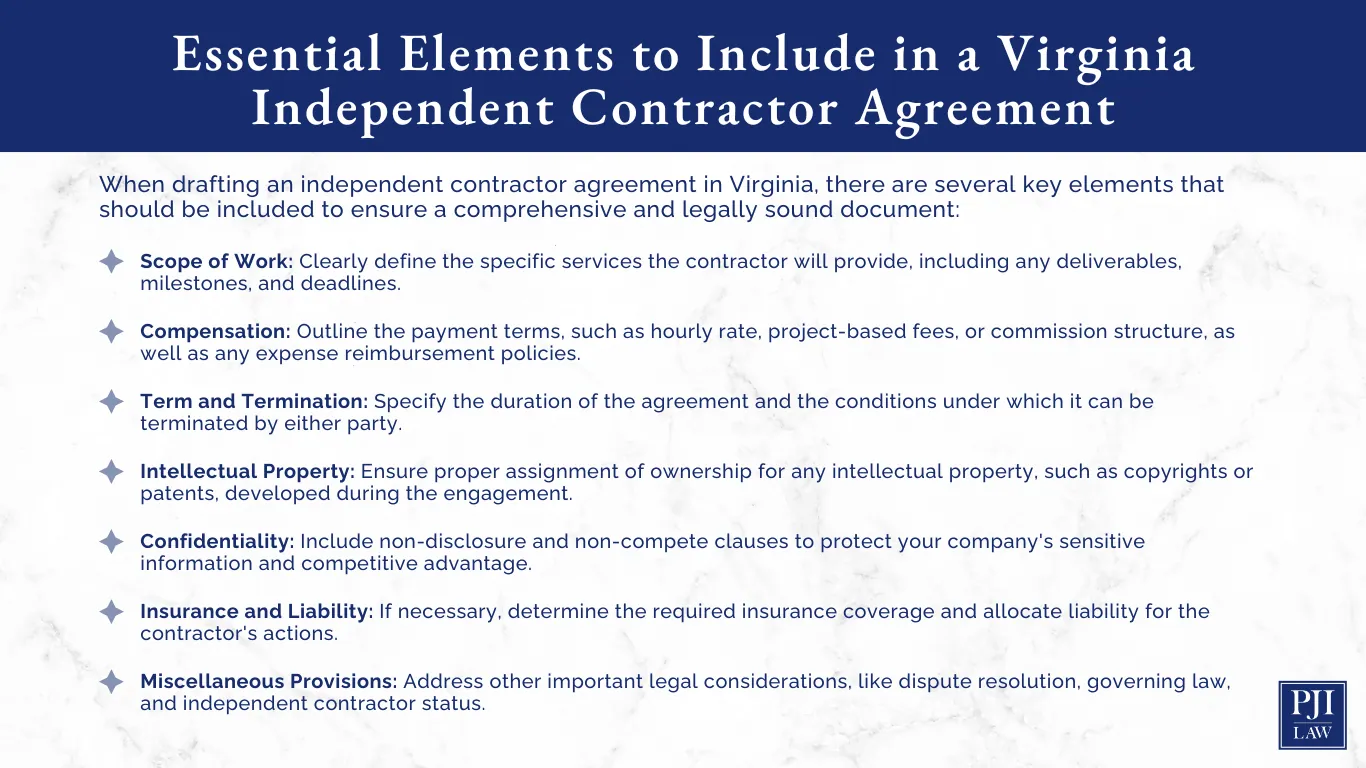
Essential Elements to Include in a Virginia Independent Contractor Agreement
When drafting an independent contractor agreement in Virginia, there are several key elements that should be included to ensure a comprehensive and legally sound document:
- Scope of Work: Clearly define the specific services the contractor will provide, including any deliverables, milestones, and deadlines.
- Compensation: Outline the payment terms, such as hourly rate, project-based fees, or commission structure, as well as any expense reimbursement policies.
- Term and Termination: Specify the duration of the agreement and the conditions under which it can be terminated by either party.
- Intellectual Property: Ensure proper assignment of ownership for any intellectual property, such as copyrights or patents, developed during the engagement.
- Confidentiality: Include non-disclosure and non-compete clauses to protect your company's sensitive information and competitive advantage.
- Insurance and Liability: If necessary, determine the required insurance coverage and allocate liability for the contractor's actions.
- Miscellaneous Provisions: Address other important legal considerations, like dispute resolution, governing law, and independent contractor status.
Working closely with an independent contractor attorney in Virginia can help ensure your agreement addresses all the necessary elements and aligns with state-specific regulations, and give you the peace of mind that your business interests are properly safeguarded.
Common Mistakes to Avoid When Drafting Independent Contractor Contracts
Entering into an independent contractor relationship without a properly structured agreement can expose your business to a variety of legal and financial risks. To ensure your independent contractor contracts are bulletproof, it's important to be aware of the common pitfalls to avoid:
Failing to Clearly Define the Scope of Work
A vague or overly broad scope of work can lead to misunderstandings and disputes over the contractor's deliverables and responsibilities. Be sure to spell out the specific services, project milestones, and expected outcomes in clear, unambiguous language.
Neglecting to Address Intellectual Property Rights
Independent contractors may create valuable intellectual property, such as designs, software code, or proprietary information, during the course of their work. Failing to properly assign ownership rights can result in costly legal battles down the line.
Omitting Confidentiality and Non-Compete Clauses
Protecting your company's confidential information and guarding against unfair competition are critical considerations. Comprehensive non-disclosure and non-compete provisions should be included to safeguard your business interests.
Improper Classification of the Worker's Status
Misclassifying an employee as an independent contractor can carry significant legal and financial penalties. Ensure your agreement accurately reflects the nature of the working relationship based on factors like control, autonomy, and financial arrangements.
Neglecting to Address Liability and Insurance
Depending on the industry in which they operate, some independent contractors must carry their own liability insurance to protect against potential claims or lawsuits arising from their work. Your contract should clearly outline these requirements and delineate the allocation of risk.
Relying on a One-Size-Fits-All Template
Every independent contractor engagement is unique, with its own set of nuances and requirements. Attempting to use a generic contract template without tailoring it to your specific situation is a recipe for trouble.
To avoid these pitfalls and draft truly robust independent contractor agreements, it's highly recommended to work with an experienced contract lawyer. 
When Is It Time to Seek Legal Assistance for Your Independent Contractor Needs?
Navigating the complexities of independent contractor agreements can be challenging, even for seasoned business owners. If you're unsure about any aspect of the contracting process or have concerns about protecting your company's interests, it's always better to err on the side of caution and consult a legal professional. An experienced independent contractor attorney can provide invaluable guidance to ensure your independent contractor relationships are properly structured and compliant with Virginia laws and regulations.
PJI Law: Your Virginia Independent Contractor Attorney
Navigating the complexities of an independent contractor agreement can be a daunting task, but you don't have to go it alone. At PJI Law, our experienced contract lawyer is here to provide the guidance you need.
As your trusted legal partner, we'll work closely with you to carefully review any independent contractor agreement language, ensuring it aligns with your best interests and the applicable laws in your state. Our team is well-versed in the nuances of contractor relationships, and we'll leverage that experience to identify potential pitfalls, negotiate favorable terms, and give you the peace of mind that your business interests are properly protected. Whether you're a company seeking to implement a comprehensive independent contractor agreement or an individual presented with such an agreement, PJI Law can help you make informed decisions that safeguard your rights and responsibilities. We understand the complexities involved in these contractual relationships, and can provide you with the necessary guidance to ensure a fair and mutually beneficial arrangement. Call us at (703) 865-6100 or complete our online form to schedule your consultation.
Copyright © 2024. PJI Law, PLC. All rights reserved.
Copyright © 2026. PJI Law, PLC. All rights reserved.
The information in this blog post (“post”) is provided for general informational purposes only and may not reflect the current law in your jurisdiction. No information in this post should be construed as legal advice from the individual author or the law firm, nor is it intended to be a substitute for legal counsel on any subject matter. No reader of this post should act or refrain from acting based on any information included in or accessible through this post without seeking the appropriate legal or other professional advice on the particular facts and circumstances at issue from a lawyer licensed in the recipient’s state, country, or other appropriate licensing jurisdiction.
3900 Jermantown Road, 2nd Floor
Fairfax, VA 22030
(703) 546-9674
https://www.pjilaw.com
Request A Complimentary Call From Our Team
Provide your details, and we’ll reach out promptly to assist you.