

In the living room of her Richmond, Virginia home, Sarah faces a daunting task after the passing of her beloved aunt. When she'd agreed to be the person named to handle probate administration in her aunt's will (known as the executor or personal representative), Sarah had no idea what these responsibilities would entail.
Now overwhelmed with grief and uncertainty, she struggles to navigate probate in Virginia — the intricate legal process involved in distributing her aunt's estate assets, paying estate taxes, and fulfilling her obligation to pay debts owed by the decedent's estate. This lack of clarity has left her feeling lost and anxious during a time of mourning, emphasizing the importance of understanding probate for personal representatives and loved ones of a deceased person.
At PJI Law, we recognize that many individuals like Sarah may find themselves in similar situations, uncertain about what steps to take in the probate process. This blog sheds light on the often misunderstood aspects of probate in Virginia, answers common questions, and demystifies the complexities of probate.
Continue reading to learn more about the probate process, then contact us at (804) 653-3450 for personalized service and attention. Whether you have been named a personal representative in a deceased person’s will or want to establish a valid will as part of a comprehensive estate plan, let us handle all of your legal needs, drawing upon our extensive knowledge and experience. 
What Is Probate?
Probate is the legal process of administering a decedent's (the legal term for the person who has died) estate, including their property and assets after their death. It is also a matter of public record. If a decedent dies with a valid will, the will dictates the distribution of the decedent’s assets. However, if an individual dies without a valid will (intestate), Virginia law determines the distribution of the decedent’s assets — which may or may not align with their wishes.
Does Every Death Have to Go Through Probate?
Probate isn’t always required. Whether or not a decedent's estate is subject to probate depends on the deceased person's assets. Among all the decedent's assets, some can bypass probate and be directly distributed to the beneficiaries. Non-probate assets could include the following:
- Retirement accounts
- Payable-on-death or transfer-on-death accounts
- Joint tenancy assets
- Property in a living trust
- Life insurance proceeds
- Pension benefits payable to a beneficiary
- Assets that have proper beneficiary designations
Probate is especially beneficial if the decedent owned property solely in their name because probating the will formally transfers the title of the property to the recipients or heirs according to the will. Typically, probate is required whenever a decedent dies and leaves behind property titled exclusively in their name. However, if an estate is small enough, the probate process may be abbreviated allowing the survivors to go through a streamlined administration process instead.
How Does Probate Work When There is No Will?
When an individual passes away in Virginia without a will, the estate is subject to the laws of intestacy. In such cases, the probate process follows a predetermined set of rules to distribute the deceased person's assets among their heirs. 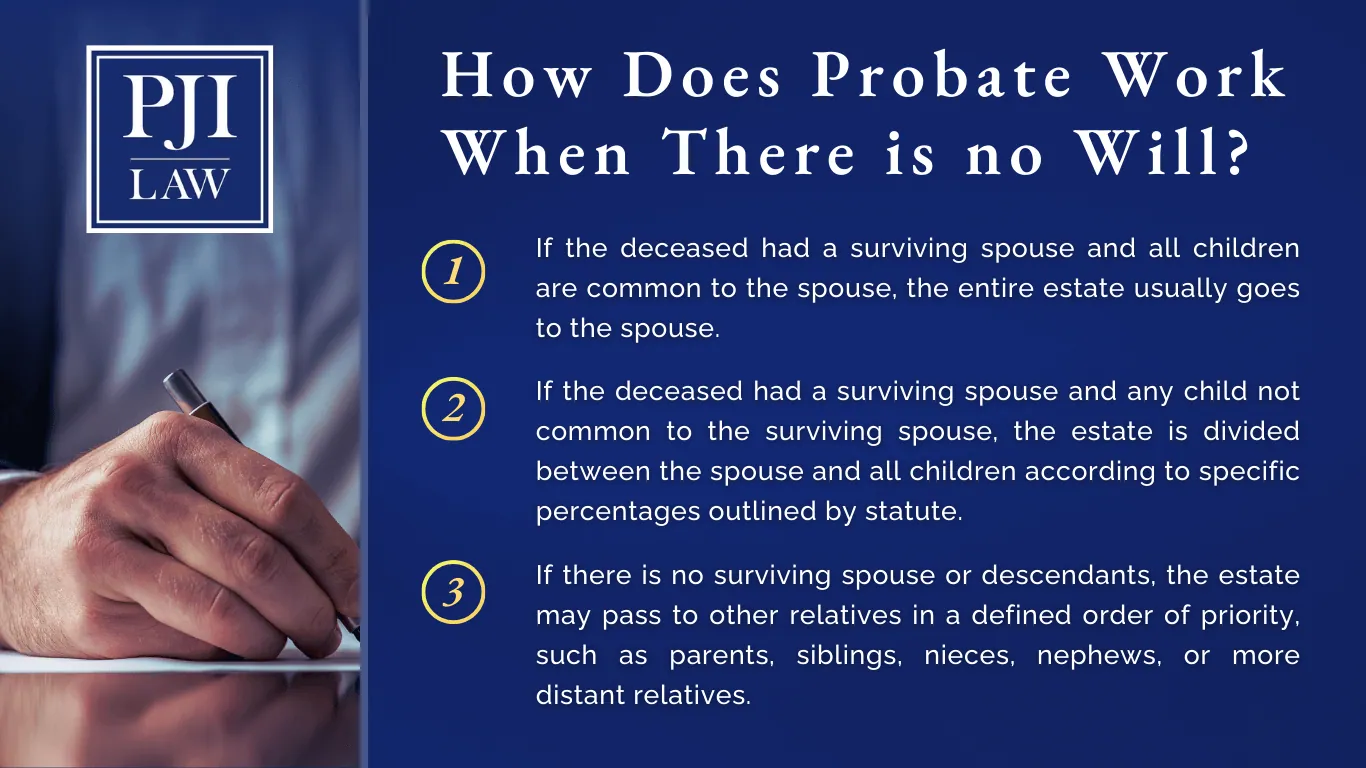 According to Virginia statute 64.2-200, the distribution of assets in intestate succession typically follows this hierarchy:
- If the deceased had a surviving spouse and all children are common to the spouse, the entire estate usually goes to the spouse.
- If the deceased had a surviving spouse and any child not common to the surviving spouse, the estate is divided between the spouse and all children according to specific percentages outlined in the statute.
- If there is no surviving spouse or descendants, the estate may pass to other relatives in a defined order of priority, such as parents, siblings, nieces, nephews, or more distant relatives.
The probate court oversees the process of identifying heirs, establishing the validity of claims, and distributing the assets accordingly. While every Virginia resident should understand state laws governing intestate succession to ensure a smooth transition of assets in the absence of a will, the best course of action is to establish a legally valid last will and testament with the help of an experienced attorney. In it, parents of minor children can name guardians to care for them in the event of both parents passing, in addition to making a beneficiary designation for their assets.
Initiating the Probate Process and Qualifying as the Personal Representative If Not Named in the Will
If the decedent's will does not specify a personal representative, an individual can initiate the probate process by taking the decedent's last will and testament and a certified death certificate to the clerk of the court and requesting to qualify as an administrator of their estate. They must go to the circuit court in the city or county where the decedent owned property or passed away.
To qualify as a personal representative, an individual must:
- Be over 18 years old
- Acquire a bond or surety, although that may sometimes be waived
- Persuade the court that they are competent and capable of serving as the personal representative
People who live outside of Virginia may still be eligible, but a Virginia resident must accompany them to the Clerk’s Office or agree to serve as the Resident Agent of the estate. 
The Role of the Personal Representative in Virginia Probate
In the Virginia probate process, a personal representative administers the estate of a deceased individual. As noted above, the personal representative is appointed either through the decedent's will, or by the court if there is no will or if the will does not designate an executor.
Duties and responsibilities of a personal representative in the Virginia probate process include:
1. Initiating the Virginia Probate Process
The personal representative initiates the probate process by filing the necessary documents with the circuit court clerk, including the will (if there is one), a petition for probate, and a form listing all heirs or beneficiaries with a claim to estate assets.
2. Inventorying Assets
The personal representative identifies, locates, and takes control of the decedent's assets, which may include bank accounts, real estate, vehicles, investments, and personal belongings.
3. Paying Debts and Expenses
The personal representative must identify and pay debts and expenses owed by the decedent, including funeral expenses, outstanding bills, the final individual tax return, and other taxes owed by the estate. Probate fees and taxes are paid from estate assets.
4. Distributing Assets
After valid debts have been settled, the personal representative distributes the remaining assets of the estate to the beneficiaries according to the terms of the will or Virginia's intestacy laws.
5. Accounting and Reporting
The personal representative must keep accurate records of all estate transactions, including income, bank statements, expenses, and distributions. They may be required to file periodic accountings with the court.
6. Seeking Legal Representation
The personal representative may seek legal counsel to navigate complex legal issues, interpret the will, handle disputes among beneficiaries, and ensure compliance with Virginia probate laws.
7. Closing the Decedent's Estate
Once all debts are paid, assets distributed, and legal requirements met, the court will approve the final settlement of the estate and discharge the personal representative of their duties.
An executor or personal representative can receive reasonable compensation for fulfilling their duties diligently and in accordance with Virginia probate laws.
The 4 Types of Virginia Probate
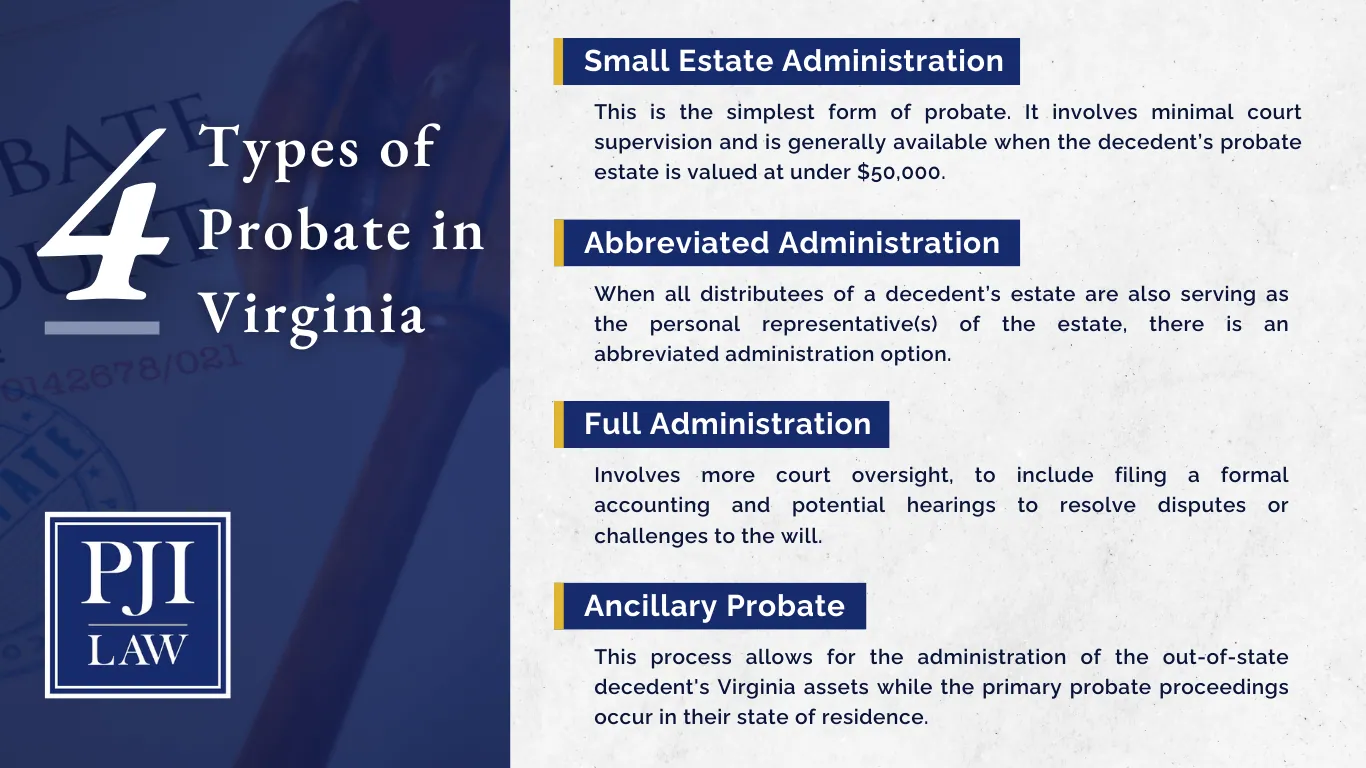
In Virginia, there are primarily three types of probate proceedings that may be utilized based on the circumstances surrounding the estate:
- Small Estate Administration: This is the simplest form of probate. It involves minimal court supervision and is generally available when the decedent’s probate estate is valued at under $75,000.
- Abbreviated Administration: In situations where the value of the decedent’s estate exceeds $75,000but all distributees of a decedent’s estate are also serving as the personal representative(s) of the estate, there is an abbreviated administration option. Once the court approves the filed inventory and confirms all valid debts have been settled, the personal representative can complete the administration of the estate without extensive judicial involvement or the need to file a formal accounting.
- Full Administration: In matters where not all residual beneficiaries under a decedent’s will are also serving as the personal representative(s), there are disputes among the beneficiaries, or challenges to the validity of the will, a full administration is needed. This process may involve hearings to resolve disputes and a formal accounting must be filed and approved by the court before the personal representative is discharged of their duties.
- Ancillary Probate: When a non-Virginia resident passes away owning property located in Virginia, ancillary probate may be required. This process allows for the administration of the out-of-state decedent's Virginia assets while the primary probate proceedings occur in their state of residence.
Understanding the nuances of these probate procedures in Virginia is crucial for personal representatives and beneficiaries to navigate the legal requirements effectively and ensure the efficient distribution of the deceased person's assets.
How Long Does the Probate Process Take?
Probate can be time-consuming, taking as few as six months or lasting for multiple years. After a decedent's death, state law generally prevents the closure or distribution of their estate before the end of the creditor period. Unlike most states, Virginia does not impose a deadline for creditors to make a claim. However, the executor can impose a deadline by initiating a Debts and Demands Hearing.
Various other elements can affect the length of probate, including:
- The existence of a testamentary trust
- Familial disagreements
- Individuals contesting the will
- The degree of estate planning the decedent completed before they died
The number of assets and the size and value of any real estate upon the decedent’s death can also impact the length of probate administration.
Can a Deceased Person's Loved Ones Receive Their Real Property Without a Will?
Virginia law allows a deceased person to transfer their real estate property to named beneficiaries through the Virginia transfer on death deed (TOD deed). A TOD deed, also known as a "beneficiary deed," enables an individual to designate a beneficiary to inherit their real estate property upon their death. It's a simple and straightforward document that can save grieving families time, money, and stress during an emotionally charged time.
One of the most significant advantages of a TOD deed is that it allows a decedent's real property to pass directly to their beneficiaries without initiating a formal probate process.
How Does a Probate Attorney Help with Probate Administration?
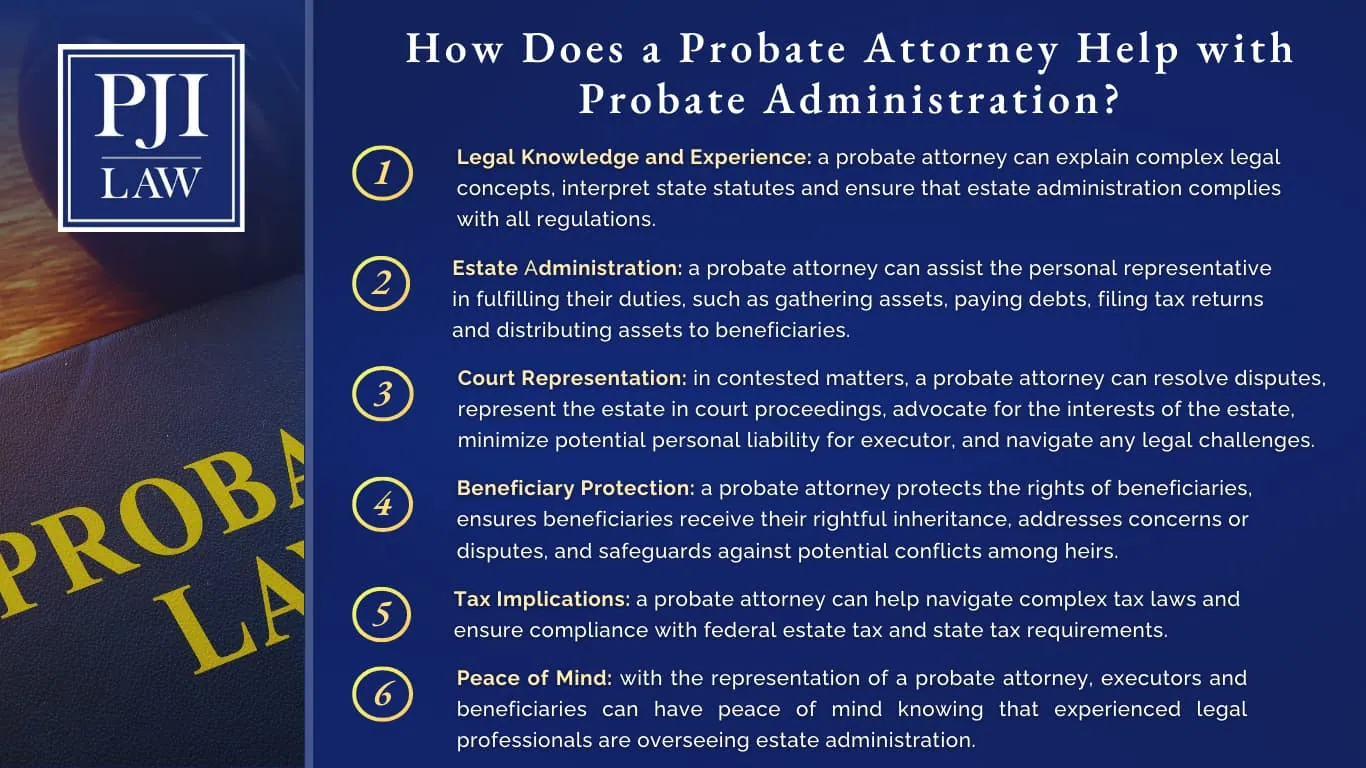
A Virginia probate attorney can guide personal representatives and beneficiaries through the probate process in multiple ways.
- Legal Knowledge and Experience: A probate attorney has extensive knowledge of the laws and procedures governing probate in Virginia. They can explain complex legal concepts, interpret state statutes, and ensure that the estate administration complies with all regulations.
- Estate Administration: A probate attorney can assist the personal representative in fulfilling their duties, such as gathering assets, paying debts, filing tax returns, and distributing assets to beneficiaries. They help streamline the administrative tasks and ensure everything is handled correctly.
- Court Representation: In contested matters, a probate attorney can resolve disputes, represent the estate in court proceedings, advocate for the interests of the estate, minimize potential personal liability for the executor, and navigate any legal challenges that may arise during the probate process.
- Beneficiary Protection: A probate attorney protects the rights of beneficiaries, ensures that beneficiaries receive their rightful inheritance, addresses any concerns or disputes that may arise, and safeguards against potential conflicts among heirs.
- Tax Implications: Probate attorneys can provide guidance on estate tax issues, including claiming estate tax portability for surviving spouses and maximizing the benefit for beneficiaries. They can help navigate complex tax laws and ensure compliance with federal estate tax and state tax requirements.
- Peace of Mind: By hiring a probate attorney to handle the legal aspects of the probate process, executors and beneficiaries can have peace of mind knowing that experienced professionals are overseeing the estate administration and addressing any legal complexities that may arise.
Overall, a Virginia probate attorney's knowledge and experience ensure a smooth and efficient probate process, facilitating the proper distribution of assets and the resolution of any legal matters that may arise.
Let PJI Law’s Probate Lawyers in Richmond, VA Guide You Through Probate Administration with Personal Attention to Detail
Are you dealing with a probate matter in and around Richmond, Virginia? Have you been searching online for a “probate attorney near me?” Established in 2010, PJI Law takes pride in offering superior probate services our clients can trust. Our attorneys and legal team have extensive experience with probate cases, providing each client with our total commitment, personal attention, and courteous, white-glove service.
Let us put you at ease as we handle your case with care and precision and ensure legal compliance. We can also help you prepare for the future by establishing a legally valid will as part of a comprehensive estate plan that fulfills your wishes, complies with Virginia law and federal law, and offers peace of mind for you and your loved ones. To learn more about probate administration and estate planning and how we can tailor a plan for you, contact us at (804) 653-3450 or complete our online form to schedule a consultation.
Copyright © 2024. PJI Law, PLC. All rights reserved.
Copyright © 2026. PJI Law, PLC. All rights reserved.
The information in this blog post (“post”) is provided for general informational purposes only and may not reflect the current law in your jurisdiction. No information in this post should be construed as legal advice from the individual author or the law firm, nor is it intended to be a substitute for legal counsel on any subject matter. No reader of this post should act or refrain from acting based on any information included in or accessible through this post without seeking the appropriate legal or other professional advice on the particular facts and circumstances at issue from a lawyer licensed in the recipient’s state, country, or other appropriate licensing jurisdiction.
3900 Jermantown Road, 2nd Floor
Fairfax, VA 22030
(703) 546-9674
https://www.pjilaw.com
Request A Complimentary Call From Our Team
Provide your details, and we’ll reach out promptly to assist you.