
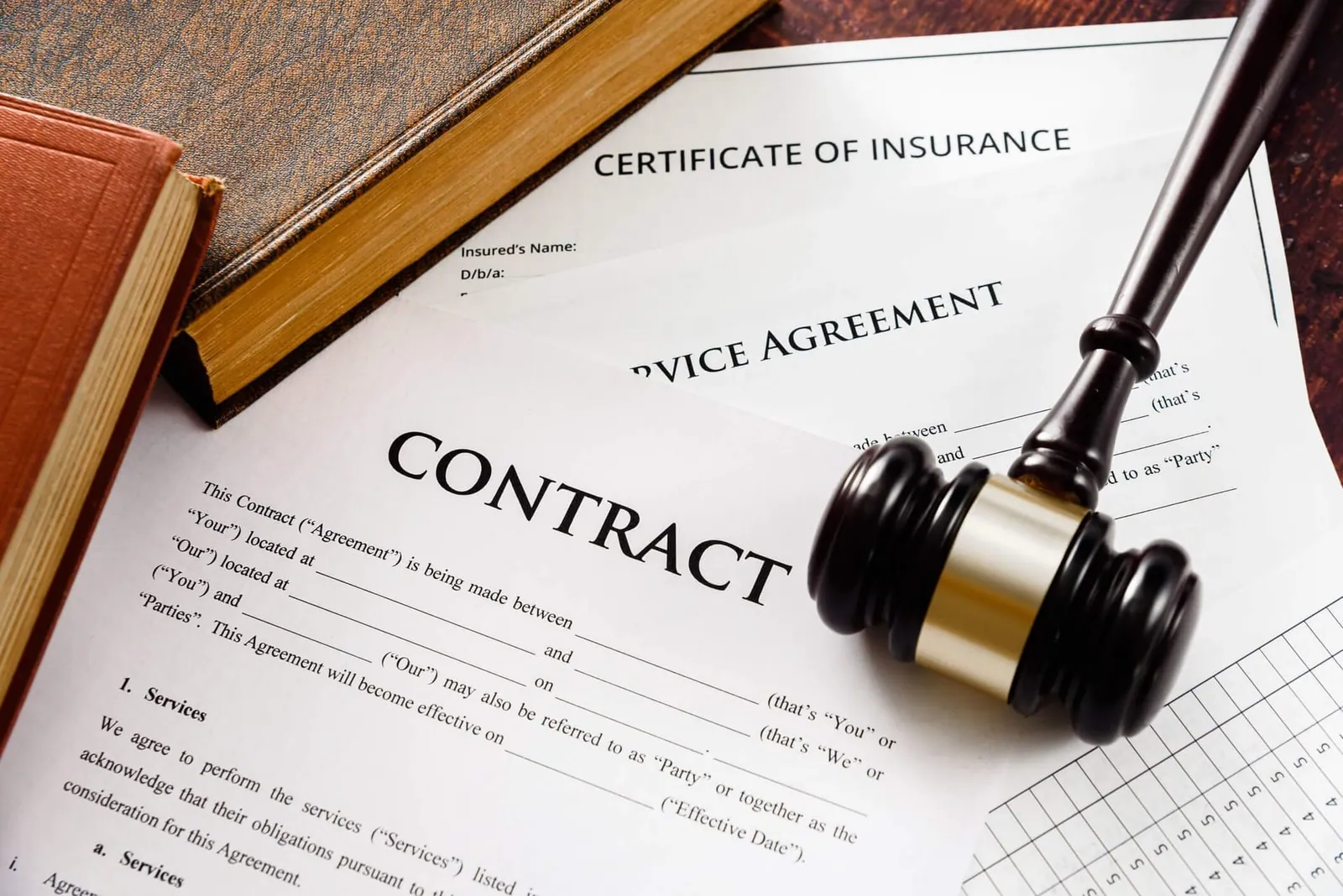
Lawyers for Contract Disputes in Richmond, Virginia
Contracts form the backbone of nearly every business transaction, agreement, and partnership. When a contract dispute arises, it can disrupt your personal or professional life, leaving you searching for solutions.
At PJI Law, our contract dispute attorneys guide clients through these complex situations, offering broad experience in Virginia's legal framework. If you're facing a contract dispute in Richmond or the surrounding areas, our experienced legal team stands ready to protect your interests, recognizing that complex business disputes can be stressful, time-consuming, and financially burdensome. Our goal is to help you resolve your matter efficiently while minimizing disruptions to your business relationships or personal life.
Contact PJI Law at (804) 653-3450 or complete our online form to schedule a consultation. PJI Law ~ Protecting Virginia individuals, families, and businesses with personalized, attentive, and dedicated service.
Key Takeaways About Contract Disputes in Richmond, Virginia
- Contracts are legally binding agreements that outline the responsibilities and expectations of all parties involved. Misinterpretations or unclear terms can often lead to disputes.
- Many disputes begin when one party fails to fulfill obligations stated in the contract, which may support a breach of contract claim depending on the facts and the agreement language.
- Virginia Code § 2.2-4363 addresses certain procurement-related contract disputes involving Virginia public bodies. It may apply when the dispute involves a government procurement contract.
- Contract dispute resolution can be achieved without litigation through methods like alternative dispute resolution, mediation, arbitration, or direct negotiation.
- Consulting a knowledgeable attorney protects your rights and handles legal disputes in compliance with Virginia contract law and any applicable federal laws.
- The experienced attorneys at PJI Law handle the legal issues involved in contract disputes with personalized service and attention. When faced with the task of resolving disputes, our legal professionals can advise an effective course of action based on your specific circumstances.
Types of Contract Disputes
Contract disputes come in many forms, from disagreements over payment terms to claims of breach of contract.
- Material Breach vs. Minor Breach: A material breach occurs when one party (the breaching party) fails to fulfill a fundamental obligation of the contract, significantly impacting its value or purpose. For example, if a contractor fails to complete the agreed-upon work, this would constitute a material breach. Conversely, a minor breach involves less substantial issues, such as delayed delivery of services that do not prevent the other party from receiving the primary benefits of the contract.
- Insurance Coverage Disputes: These disputes arise when insurance companies and policyholders disagree on policy terms, coverage limits, or claim payments. Such disagreements can significantly impact individuals and businesses, making it important to clarify contractual terms upfront.
- Business Litigation: Businesses often encounter business litigation and disputes in their daily operations, including shareholder disputes, partnership disputes over roles or profit-sharing, or issues related to discrimination claims within a corporate structure. A clear legal framework can promote fairness and accountability.
- Neutral Third Party Interventions: Many contract disputes are resolved with the help of a neutral third party through mediation or arbitration. These alternative dispute resolution methods work particularly well in commercial litigation, where avoiding lengthy court battles can save time and resources.
- Ambiguities in Contract Terms: Far too often, parties disagree and conflicts arise as to the exact meaning of contract language because the contract contains ambiguous language.
- Misappropriation of Trade Secrets: This infraction occurs when one party improperly uses or discloses confidential business information, such as client databases, product designs, or proprietary processes. These disputes often arise in employment or partnership settings and can lead to significant financial and reputational damage if not properly addressed.
Establishing a Contract Breach
In breach of business contract law matters, there are typically three components involved in successful breach of contract claims:
- A legally enforceable contract
- Proof that the other party breached the agreement
- Evidence that you suffered damages consequent to the breach of contract.
Possible Damages in Breach of Contract Cases
When a breach of contract occurs, it can lead to substantial financial and non-financial consequences for the involved parties. The legal system provides remedies to compensate for these losses and uphold the terms of the agreement. Monetary damages are among the many remedies available.
What Are Monetary Damages?
Monetary damages are financial compensation awarded by the court to the non-breaching party in a contract dispute. These damages seek to restore the injured party to the position they would have been in had the contract been fulfilled as agreed.
Unlike equitable remedies like injunctions or specific performance, monetary damages focus entirely on financial restitution. They encompass several types, each designed to address specific kinds of losses.
Types of Monetary Damages in Breach of Contract Cases
1. Compensatory Damages
Compensatory damages are a common form of monetary damages. They cover the actual losses or expenses incurred due to the breach. These damages are further categorized into:
- Direct Damages: These compensate for losses directly tied to the breach. For example, if a supplier fails to deliver goods as agreed, the cost to purchase those goods from an alternative source would be recoverable as direct damages.
- Consequential Damages (detailed below): These cover secondary losses caused by the breach.
Example: Imagine a catering company that breaches its contract to provide services for a corporate event. The event organizer has to hire another caterer at a higher price, incurring additional expenses. They can claim these extra costs as compensatory damages.
2. Consequential Damages
Also known as special damages, consequential damages go beyond the immediate scope of the contract to compensate for indirect or foreseeable losses caused by the breach. For a judge to award these damages, the plaintiff must prove that the breaching party was aware of the potential consequences when the contract was formed.
Example: Consider a software company hired to develop a custom application for a retail business before its grand opening. If the software is not delivered on time, causing the retailer to lose revenue during peak seasons, those lost profits might be recoverable as consequential damages.
3. Punitive Damages
Unlike compensatory and consequential damages, punitive damages focus on punishing particularly harmful conduct. Courts rarely award them in breach of contract matters, and they often require conduct beyond a simple breach, such as fraud or other intentional wrongdoing tied to the dispute.
Example: If a contractor knowingly uses substandard materials to construct a building despite representations of high-quality components, a court could award punitive damages to penalize the dishonest actions.
4. Nominal Damages
Nominal damages recognize that a breach occurred but caused little or no financial loss. While they provide a small monetary award, they serve as a symbolic victory for the plaintiff and uphold the principle that contracts must be honored.
Example: Suppose Party A breaches a minor term of a contract with Party B, but Party B does not suffer any measurable financial harm. The court may still award a small amount of nominal damages to acknowledge Party B's rights.
5. Liquidated Damages
Liquidated damages are predetermined amounts specified within a contract as the agreed-upon compensation in the event of a breach. These provisions are particularly useful in contracts where actual damages might be hard to calculate or prove.
To be enforceable, the liquidated damages clause must meet certain criteria, such as being reasonable and not punitive in nature.
Example: A construction contract may include a liquidated damages clause stating that the contractor must pay $1,000 per day for every day the project is delayed past the agreed-upon deadline. If the contractor breaches the deadline, the client can claim the stipulated daily sum.
How Are Monetary Damages Calculated?
The calculation of monetary damages depends on the nature and extent of the losses incurred. Courts typically examine several factors, including:
- The terms of the contract
- The circumstances of the breach
- Evidence of financial harm, such as invoices, receipts, and qualified testimony
- Whether the damages were foreseeable at the time of contract formation
This comprehensive approach seeks to award fair and proportionate damages.
Limitations on Monetary Damages
Although monetary damages can serve as an important remedy, they are not unlimited. Courts impose various checks to prevent excessive or unjust conclusions:
- Duty to Mitigate: The non-breaching party must take reasonable steps to minimize their losses. Failure to do so can reduce the amount of recoverable damages.
- Foreseeability: Consequential damages are only awarded if the losses were foreseeable at the time of the contract.
- Reasonableness: The value of damages must be reasonable and directly supported by evidence.
Our Unique Approach to Contract Disputes
Every commercial litigation attorney at PJI Law knows that no two disputes require the same legal action. Whether it involves a business partnership, data breaches, or tortious interference, we take the time to learn about your situation, your goals, and the complexities of your contract to utilize the legal system as we seek contract dispute resolution.
Comprehensive Legal Analysis
Contract cases can hinge on the smallest details. We carefully examine your contract, correspondence, and any related documentation to build a strong foundation for your case.
Strategic Resolution Options
While we are always prepared to fight on your behalf in court, we know there are benefits to exploring alternate dispute resolution methods, such as mediation or arbitration. These approaches can save time and resources in pursuit of a satisfactory resolution.
Client-Focused Service
At PJI Law, your needs come first. Our team delivers consistent updates, explains your options in clear terms, and informs you every step of the way. Unlike firms that treat clients as case files, we strive to provide tailored service that reflects our commitment to excellence.
How PJI Law Helps You with Contractual Claims in Richmond, Virginia
Handling a contract dispute can feel overwhelming, but the right legal team can turn confusion into clarity and conflict into resolution.
1. Initial Consultation and Case Assessment
We begin by sitting down with you to discuss the details of your case. During this phase, we'll review documents, establish your priorities, and outline the possible paths forward.
2. Evidence Gathering and Documentation
Strong evidence supports the effort to resolve contract disputes. Whether it's email correspondence, invoices, or meeting notes, we'll work with you to collect the fundamental documentation that undergirds your claims.
3. Compliance with Virginia Law
Contract disputes often involve procedural rules and deadlines that can affect your options. Some contracts also impose notice requirements. We track filing deadlines and required steps so the matter can move forward in an organized way.
4. Negotiations and Alternative Resolution
Where appropriate, we will explore negotiation and alternative dispute resolution options. Our goal is to find a solution that aligns with your objectives while avoiding unnecessary conflict.
5. Litigation Advocacy
If a court battle is unavoidable, our experienced litigators will fight for you, from filing legal actions to presenting compelling arguments in court.
Avoiding Potential Disputes That Can Disrupt Business Relationships
Creating a contract that minimizes disputes and helps everyone involved fulfill their contractual obligations starts with transparent language. Contracts serve as the foundation for agreements between two or more parties, and their clarity can often determine whether potential legal issues arise down the line.
Use Clear and Concise Language
The first rule in contract drafting is to eliminate ambiguity. Avoid overly complex legal jargon and make sure every clause is straightforward. Each party should be able to know the terms without needing a lawyer to interpret them. For instance, instead of saying "in due course," specify exact timelines like "within 30 days."
Define Contractual Obligations in Detail
Clearly outline the responsibilities and expectations of all involved. Use specific language to describe what each party is contractually bound to deliver, whether it's goods, services, or payment. For example, in a partnership agreement, you might specify that one party will contribute $50,000 in capital while the other manages daily operations.
Consider External Factors
Unforeseen circumstances, like economic downturns or natural disasters, can impact a contract. Addressing external factors in advance can prevent legal issues later. A well-drafted contract might include a force majeure clause, outlining what happens if contractual obligations can't be met due to unexpected events.
Include Mechanisms for Dispute Resolution
Even with good intentions, conflicts can occur. Incorporate a clear process for resolving disputes, such as mediation or arbitration to avoid the cost and stress of court proceedings and prevent small disagreements from escalating into larger legal battles.
Procure Mutual Agreement and Documentation
Before finalizing a binding contract, all parties should agree to the terms and fully know their obligations, a particularly urgent consideration for partnership agreements where trust and mutual alignment form the backbone of success. Document consent through signatures and keep a copy accessible to everyone involved.
Contact PJI Law About Contract Disputes in Richmond, Virginia
Don't let a contract dispute disrupt your business relationships or personal life. Contact PJI Law in Richmond, Virginia, at (804) 653-3450 or complete our online form to schedule a consultation.
PJI Law ~ Protecting Virginia individuals, families, and businesses with personalized, attentive, and dedicated service.
Ready to speak with our team?
Provide your details, and we’ll reach out promptly to assist you.